
Zkml 2026 limits to account for
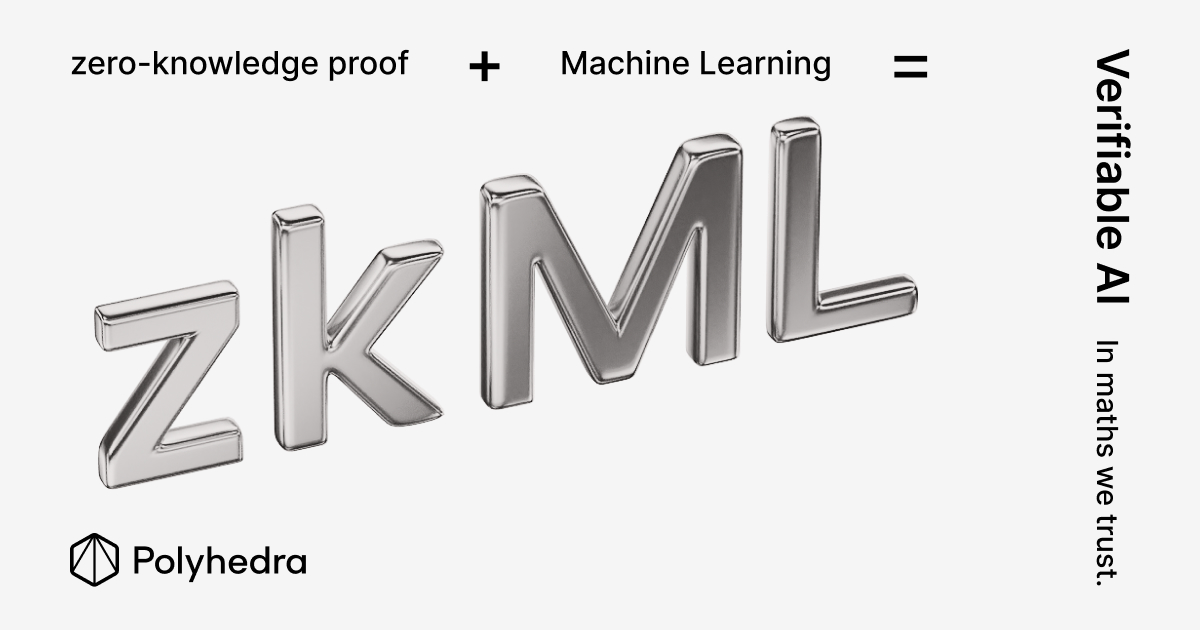
By 2026, regulatory pressure on AI systems has shifted from voluntary transparency to mandatory verification. Zero-Knowledge Machine Learning (ZKML) is becoming the standard infrastructure for proving that an AI model operated within legal and ethical bounds without exposing proprietary weights or sensitive user data.
The primary constraint for enterprises is balancing computational overhead with proof generation speed. While early frameworks struggled with the complexity of deep learning models, 2026 solutions leverage optimized circuits for specific inference tasks. This allows companies to provide audit-ready proofs of compliance, such as confirming that a hiring algorithm did not use protected attributes, while keeping the actual decision logic private.
Adoption is driven by two factors: the need to satisfy regulators who demand explainability, and the need to protect intellectual property. As markets mature, the ability to cryptographically prove model behavior will become a competitive advantage, separating compliant AI deployments from those that remain opaque and legally vulnerable.
Zkml 2026 choices that change the plan
Implementing ZKML in 2026 requires balancing computational overhead against verification speed. You cannot optimize for both simultaneously without significant architectural compromises. The choice of framework dictates whether your AI inference remains practical for real-time applications or becomes a theoretical exercise in cryptographic proof generation.
The primary tension lies in the proof system selection. SNARKs offer small verification sizes and fast checking, making them ideal for blockchain-based audits, but they require a trusted setup that some regulatory bodies view as a risk. STARKs eliminate the trusted setup requirement and offer quantum resistance, yet their proof sizes are larger, increasing storage and transmission costs. For high-stakes regulatory compliance, the absence of a trusted setup often outweighs the minor efficiency gains of SNARKs.
Another critical factor is the trade-off between generality and performance. General-purpose zkVMs (Zero-Knowledge Virtual Machines) allow you to verify any standard ML code, including Python-based PyTorch models, without rewriting logic. However, this flexibility comes with a massive computational penalty. Specialized zkML compilers, which translate specific neural network operations into arithmetic circuits, are significantly faster but lock you into supported model architectures. If your AI stack evolves rapidly, the rigidity of specialized compilers can become a bottleneck.
Finally, consider the cost of proof generation versus verification. In a 2026 context, where AI inference volume is high, the cost to generate the proof often exceeds the cost to verify it. If your use case involves auditing thousands of daily predictions, you need a system that minimizes generation time, even if it means larger proof sizes. Conversely, if you are verifying a single high-value decision, verification speed is less critical. Use the table below to compare the dominant trade-offs across current zkML approaches.
| Framework | Proof System | Generation Speed | Trust Model | Best Use Case |
|---|---|---|---|---|
| ZK-SNARKs | SNARK | Fast | Trusted Setup | High-frequency, low-latency verification |
| ZK-STARKs | STARK | Slow | Trustless | Quantum-resistant, high-security audits |
| zkVMs (e.g., RISC Zero) | Groth16/Halo2 | Very Slow | Trusted Setup | General-purpose ML code verification |
| Specialized Compilers | Custom Circuits | Medium | Varies | Fixed architecture, cost-sensitive inference |
Choose the next step
ZKML works best as a clear sequence: define the constraint, compare the realistic options, test the tradeoff, and choose the path with the fewest hidden costs. That order keeps the advice usable instead of decorative. After each step, pause long enough to check whether the recommendation still fits the reader's actual situation. If it depends on perfect timing, unusual access, or a best-case budget, include a simpler fallback.
Spotting Weak ZKML Claims
ZKML promises to make AI models auditable, but the market is full of vague assertions. Before trusting any integration, verify the underlying cryptographic proof. A model that cannot generate a valid zero-knowledge proof for its inference is not truly verifiable, regardless of marketing language.
Verify the Proof System
Many projects claim "ZKML" while using generic encryption or opaque hashing. True ZKML requires a proof system like zk-SNARKs or STARKs that validates the entire computation path. Check if the framework supports specific model architectures, such as vision transformers or distilled LLMs, rather than just simple linear regressions. If the documentation does not specify the proof system, treat the claim with skepticism.
Check for Real-World Benchmarks
Avoid projects that only publish theoretical papers or synthetic test results. Look for independent audits and live deployments on mainnet. The ACM research on ZKML optimization frameworks highlights the gap between academic prototypes and production-ready systems. Ensure the provider has published performance metrics on latency and proof generation time, not just accuracy scores.
Beware of Price Speculation
Do not confuse technological viability with token price. ZKML price predictions often rely on speculative sentiment rather than adoption metrics. Focus on the utility: is the model actually being used for compliance or trust? A high market cap does not indicate that the zero-knowledge proofs are efficient or secure. Always separate the financial asset from the technical infrastructure.
Zkml 2026: what to check next
Zero-knowledge machine learning (ZKML) is still emerging. Before integrating it, verify the actual proof overhead and regulatory acceptance for your specific use case.
No comments yet. Be the first to share your thoughts!