
What ZKML Means for AI Compliance
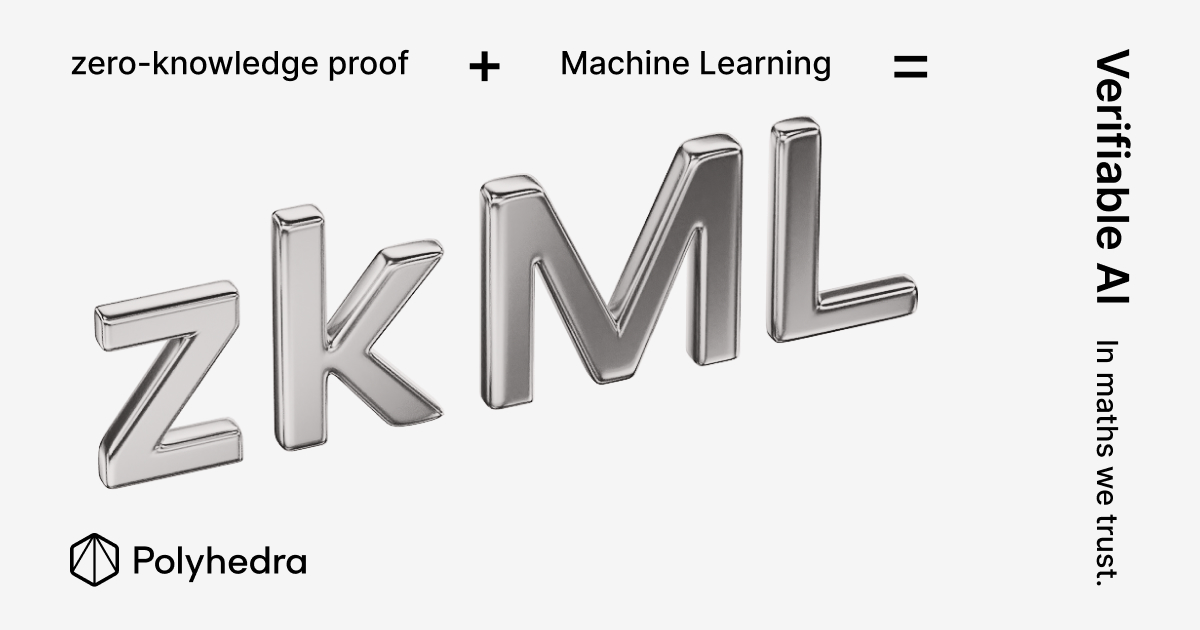
Zero-Knowledge Machine Learning (ZKML) is an emerging technology that combines zero-knowledge proofs (ZKPs) with machine learning algorithms to address privacy and transparency concerns. It allows anyone to verify that an AI model was executed correctly without exposing the underlying data or model weights.
For legal and regulatory audiences, ZKML is not a speculative crypto asset. It is a verification layer. Think of it as a digital notary stamp for AI decisions. A company can prove its model followed specific rules and used compliant data, while keeping its proprietary algorithms and sensitive customer information completely hidden.
This capability is critical for industries like finance and healthcare, where regulatory frameworks such as the EU AI Act require strict auditing. ZKML provides the technical mechanism to demonstrate compliance with these regulations. It shifts the burden of proof from manual, opaque audits to mathematical certainty.
By using ZKML, organizations can satisfy regulatory requirements for transparency and fairness. They can prove their AI systems are operating as intended, without revealing trade secrets or violating data privacy laws. This balance between verification and confidentiality is the core value proposition for compliant AI systems.
Why the Market Needs Verifiable AI
The push for zero-knowledge machine learning (ZKML) is no longer just an academic exercise in cryptography. It is a direct response to a regulatory environment that demands proof of compliance without exposing proprietary secrets or sensitive data. As artificial intelligence systems become embedded in high-stakes sectors like finance, healthcare, and legal judgment, the ability to audit these models has shifted from a best practice to a legal requirement.
The European Union’s AI Act serves as the primary catalyst for this shift. By categorizing AI systems based on risk levels, the regulation effectively mandates transparency for high-risk applications. Companies deploying these models must demonstrate that their systems operate as intended, adhere to non-discrimination standards, and maintain human oversight. However, traditional auditing methods often require revealing the model’s weights or training data, which compromises intellectual property and violates data privacy laws. ZKML resolves this conflict by allowing organizations to generate cryptographic proofs that verify compliance while keeping the underlying model and data private.
This regulatory pressure is accelerating investment in verifiable AI infrastructure. The global AI regulation market is projected to grow significantly as compliance requirements tighten in 2026. Enterprises are no longer viewing ZKML as a speculative technology but as a necessary component for market access. Without the ability to provide machine-verifiable evidence of fairness and safety, companies risk facing severe penalties and loss of consumer trust. The market is therefore shifting toward solutions that offer both cryptographic security and regulatory alignment, making verifiable AI a critical enabler for the next generation of trusted AI systems.
How ZKML Architecture Verifies AI
ZKML transforms machine learning inference into a verifiable cryptographic puzzle. The core challenge lies in the mismatch between how neural networks operate and how zero-knowledge circuits (ZK-SNARKs) function. Neural networks rely on continuous floating-point arithmetic and non-linear activation functions like ReLU. ZK circuits, however, operate on discrete fields. Converting a model’s math into a circuit that a verifier can check without seeing the data requires heavy optimization.
The first step is converting the ML model from floating-point to fixed-point arithmetic. This reduces precision but makes the math compatible with finite fields. Frameworks like ZKML simulate this conversion to ensure the proof remains accurate while minimizing the circuit size.
Next, the model’s operations are broken down into basic arithmetic gates (addition and multiplication). Complex layers, such as convolutions or attention mechanisms, are flattened into these gate sequences. This creates the "circuit" that the prover will execute.
The prover runs the model on the input data using the circuit. Instead of sharing the result, it generates a compact cryptographic proof. This proof certifies that the output was computed correctly from the input and the model weights, without revealing either.
Optimization is the bottleneck. Early ZKML systems were too slow for real-world use. The 2024 framework by Chen et al. introduced a cost model that simulates circuit layout to find the most efficient configuration. This approach allows for the proofing of state-of-the-art vision models and distilled LLMs, which were previously too complex for ZK circuits [src-serp-1].
Frameworks Driving Adoption
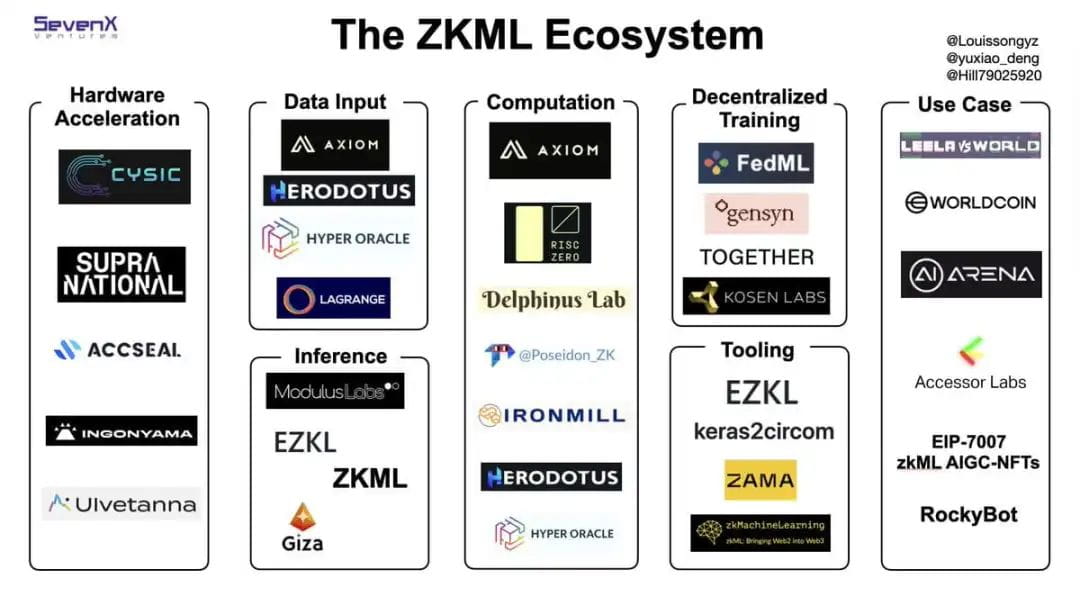
Two frameworks are currently leading the technical implementation: ZKML and EZKL.
ZKML (by Daphne Kang) is an open-source system designed specifically for optimizing ML inference in ZK-SNARKs. It focuses on the low-level circuit construction, providing the tools to convert PyTorch models into efficient zk circuits [src-serp-8].
EZKL (Efficient Zero-Knowledge Library) takes a different approach. It allows developers to run ML models on encrypted data without building circuits from scratch. EZKL integrates with existing ML pipelines, making it easier for teams to add privacy-preserving inference to their applications.
| Feature | ZKML | EZKL |
|---|---|---|
| Primary Focus | Circuit Optimization | Developer Integration |
| Best For | Custom Proofs | Production Pipelines |
| Complexity | High | Medium |
These tools are making ZKML viable for regulatory compliance. By proving that an AI model’s decision was made using specific, approved data and logic, companies can demonstrate adherence to regulations like the EU AI Act without exposing proprietary algorithms or sensitive user data.
ZKML Market Snapshot and Trading Activity
The financial ecosystem surrounding ZKML tokens reflects a market in early discovery. As of the latest data from CoinMarketCap, ZKML trades at approximately $0.008221 USD. This valuation places the asset in a niche segment of the crypto market, where trading volumes often fluctuate significantly based on regulatory news and technological breakthroughs rather than broad retail speculation.
Trading volume remains a critical indicator of investor interest. Current 24-hour volume metrics show minimal activity, suggesting that liquidity is currently thin. For institutional players and developers focused on AI transparency, this low volume is expected in the nascent stage of the protocol. However, it also highlights the risk of price volatility during periods of low trading depth.
The correlation between ZKML's market performance and broader AI regulatory trends is becoming more pronounced. As governments in the EU and US finalize AI safety standards, the demand for verifiable model proofs may drive sustained buying pressure. Investors are watching for volume spikes that signal institutional adoption or major partnerships with AI infrastructure providers.
Comparing ZKML Implementation Approaches
The ZKML landscape is split between specialized commercial platforms and general-purpose open-source frameworks. Selecting the right approach depends on whether you prioritize ease of integration with existing AI stacks or granular control over proof generation.
Polyhedra Network offers a managed zkML infrastructure designed for rapid deployment. Their platform abstracts much of the cryptographic complexity, allowing developers to verify model execution without building custom circuits from scratch. This makes it a strong candidate for enterprises that need to prove AI compliance quickly, though it often comes with higher computational costs and less flexibility than open alternatives.
Open-source projects like EZKL and ddkang/zkml provide a different trade-off. EZKL focuses on converting standard ML models (like TensorFlow or PyTorch) into ZK-friendly formats, prioritizing developer accessibility. Meanwhile, frameworks like ddkang/zkml offer deeper integration with ZK-SNARKs, giving researchers more control over the proof system but requiring significant engineering effort to optimize for performance.
The table below compares these approaches based on model support, integration complexity, and typical use cases.
| Framework | Type | Model Support | Integration Difficulty | Best For |
|---|---|---|---|---|
| Polyhedra | Commercial | Broad (LLMs, Vision) | Low (Managed API) | Rapid compliance audits |
| EZKL | Open-Source | TensorFlow, PyTorch | Medium | ML engineers adopting ZK |
| ddkang/zkml | Open-Source | Custom ZK-SNARKs | High | Research and optimization |
| ZKML (Chen et al.) | Research | GPT-2, Vision | High | Academic benchmarks |
FAQs on Zero-Knowledge Machine Learning
What is ZKML crypto?
Zero-Knowledge Machine Learning (ZKML) in crypto refers to the integration of zero-knowledge proofs (ZKPs) with machine learning models to verify computations on-chain without revealing the underlying data or model weights. This allows blockchain networks to validate AI-driven decisions—such as fraud detection or automated trading—while maintaining the privacy and integrity of the input data. Projects like those developed by the Protocol Engineering (PSE) team demonstrate how ZKML can bridge the gap between off-chain AI inference and on-chain verification.
What is a ZKML file?
There is no single standard "ZKML file" format. Instead, ZKML involves two distinct components: the machine learning model itself (often exported as ONNX or TensorFlow graphs) and the cryptographic proof (typically generated in formats like STARK or SNARK circuits). These are processed separately; the model defines the logic, while the proof circuit verifies that the model executed correctly against specific inputs.
Is zero-knowledge proof legit?
Yes, zero-knowledge proofs are a mathematically rigorous cryptographic method that has been peer-reviewed and widely adopted. In the context of ZKML, they provide a verifiable guarantee that a machine learning model was run correctly without exposing the proprietary algorithm or sensitive user data. This legitimacy is increasingly critical for regulatory compliance in AI, where auditability is required but data privacy laws (like GDPR) restrict data sharing.
What is ZKP in ML?
ZKP in ML stands for using zero-knowledge proofs to verify the output of a machine learning model. It allows a user to prove to a verifier that a specific model produced a specific result from specific inputs, without revealing the model's parameters or the input data. This is essential for trustless AI systems, ensuring that the AI behaves as promised without requiring trust in the provider.
No comments yet. Be the first to share your thoughts!