
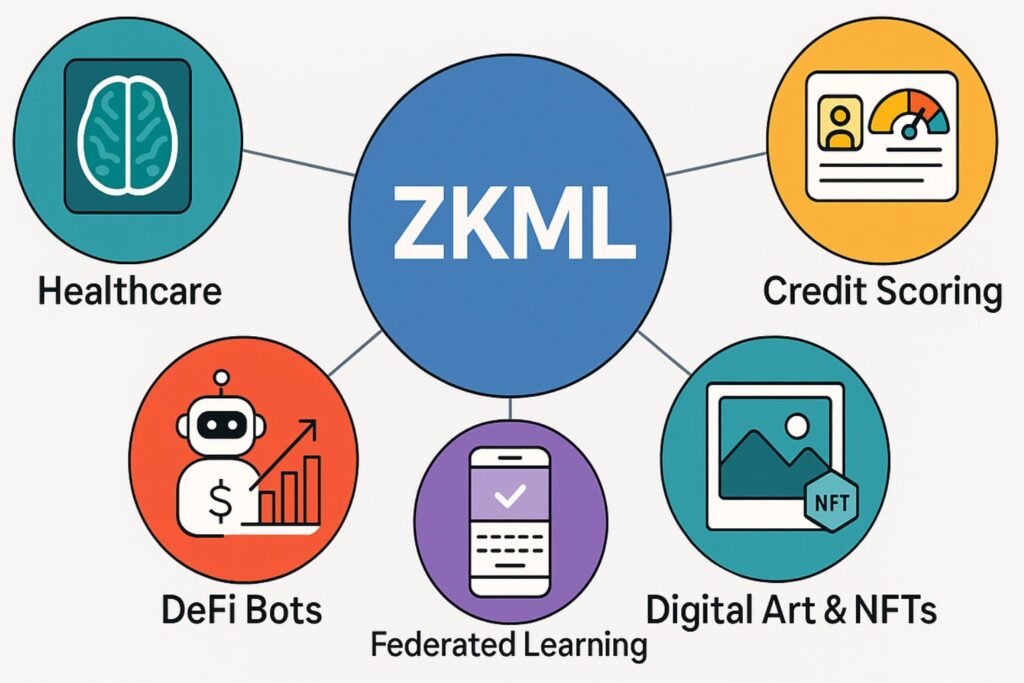
ZKML as enterprise infrastructure
Zero-knowledge machine learning (ZKML) provides a necessary security layer for enterprise AI, addressing the trust gap created by the "black box" nature of proprietary algorithms. Organizations cannot outsource critical decision-making to opaque models without a mechanism to verify that outputs were generated correctly and ethically. ZKML solves this by combining zero-knowledge proofs (ZKPs) with machine learning, allowing providers to prove model execution integrity without revealing proprietary weights or sensitive user data. This transforms AI from a trust-based service into a verifiable utility essential for high-stakes financial environments.
Verifying inference without revealing IP
Effective ZKML adoption requires distinguishing between must-have requirements for regulatory compliance and nice-to-have features for operational efficiency. A practical implementation must survive normal use, maintenance, and budget constraints. The following criteria outline the core value proposition for financial institutions evaluating this technology.
Decentralized Lending and Credit Scoring
Traditional credit scoring relies on centralized authorities sharing private financial histories. In DeFi, borrowers need to prove solvency or creditworthiness to secure loans without liquidating assets or exposing their entire financial ledger. ZKML enables a lending protocol to verify that a borrower’s off-chain credit score meets a specific threshold. The system generates a zero-knowledge proof attesting to this fact, ensuring the lender can trust the risk assessment while the borrower’s private data remains encrypted and hidden from the blockchain and other users.
Institutional Auditability and IP Protection
For institutional finance, the opacity of proprietary AI models poses significant regulatory and intellectual property risks. ZKML allows financial institutions to audit the logic of their trading or risk models without disclosing the underlying algorithms to competitors or regulators. By providing a mathematical guarantee that the model output corresponds to the intended logic and input data, ZKML bridges the gap between proprietary secrecy and regulatory compliance. This ensures that the AI’s decision-making process is transparent in its integrity, satisfying audit requirements without compromising competitive advantage.
| Dimension | Traditional AI Inference | ZKML Inference |
|---|---|---|
| IP Protection | Proprietary models are exposed to the host environment, risking theft or reverse engineering. | Model weights and logic remain encrypted; only the proof is public, preserving IP. |
| Data Privacy | Sensitive financial data must be decrypted and processed in clear text, creating exposure points. | Inputs are encrypted; the proof verifies computation on ciphertext without revealing the data. |
| Auditability | Trust is based on reputation and opaque internal logs, making external verification difficult. | Cryptographic proofs provide mathematically verifiable evidence of correct execution for any auditor. |
Market dynamics and token performance
The ZKML token trades as a speculative instrument on the fringes of the broader AI and privacy narratives, distinct from the enterprise-grade cryptographic technology it represents. Current market data indicates a low-cap asset with limited liquidity. The live price sits at $0.010642 USD, with a 24-hour trading volume of just $3,054.17 USD, reflecting a 2.74% decline in the last session. This volume profile suggests the token is not yet a primary vehicle for institutional capital, but rather a retail-driven play on the zero-knowledge proof sector.
This price action highlights the current disconnect between the technological promise of verifiable AI and the financial markets. While enterprise adoption focuses on regulatory compliance and data privacy, the token market reacts to broader crypto sentiment and narrative cycles. The low trading volume means that price movements can be volatile and disconnected from fundamental technological milestones. Investors must distinguish between the utility of the ZKML protocol and the speculative value of the ZKML token. The technology itself is gaining traction in decentralized finance and institutional privacy solutions, but the token’s market performance remains tethered to the highly volatile crypto asset class, where liquidity constraints and low market capitalization create significant risk.
Common questions about ZKML
What is zkML crypto?
Zero-knowledge machine learning is a cryptographic technique that facilitates the verification of machine learning models on blockchain protocols without disclosing the underlying computations or data [1]. By combining zero-knowledge proofs (ZKPs) with machine learning algorithms, zkML allows a prover to demonstrate that a specific model produced a correct output based on private inputs, ensuring data privacy while maintaining auditability [2].
What is a real world zkML application?
A decentralized lending platform uses zkML to evaluate a borrower's creditworthiness. The system generates a Zero-Knowledge Proof that verifies the borrower's credit score exceeds a required threshold without revealing their financial data or the model used [3]. This approach solves the enterprise trust gap by enabling risk assessment without compromising competitive intelligence or user privacy.
Is zero-knowledge proof legit?
Zero-knowledge proof is a valid cryptographic protocol. NTT Data describes it as essential technology for bringing trustworthiness to Web3 privacy and securing future digital societies [4], [5].
Is XRP a ZKP?
XRP is not a ZKP, but the XRP Ledger integrated Boundless to support native verification of ZK proofs and enable private transactions on its public blockchain [6].
No comments yet. Be the first to share your thoughts!