
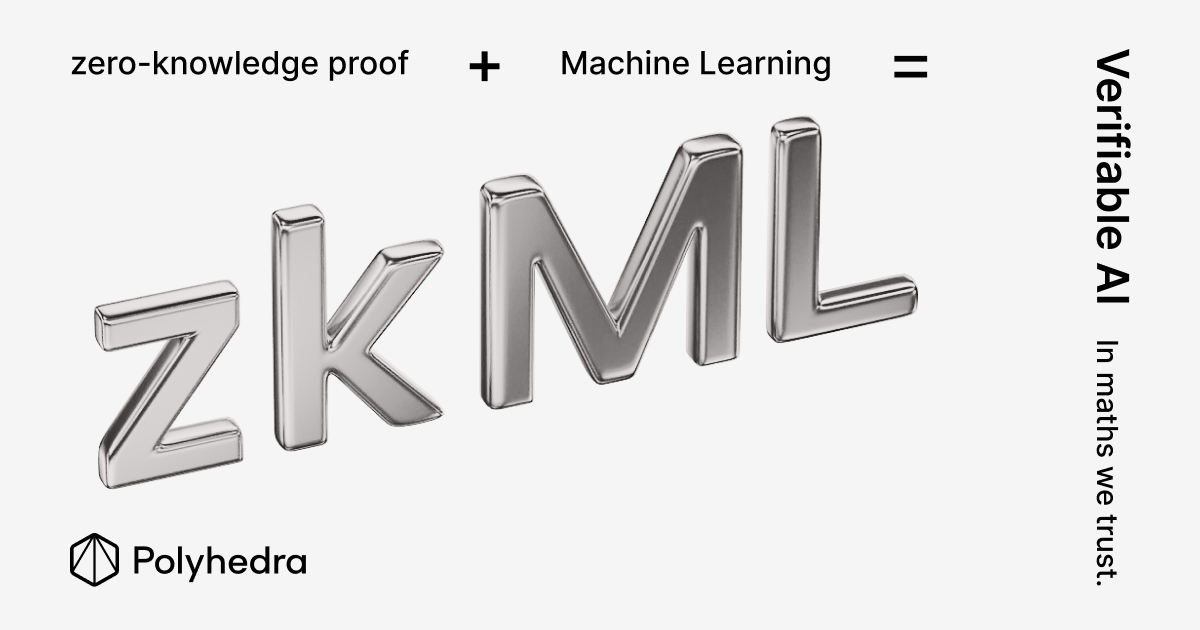
ZKML market overview
ZKML (Zero-Knowledge Machine Learning) occupies a distinct position in the 2026 market, bridging advanced cryptographic verification with machine learning infrastructure. Unlike broad blockchain platforms, ZKML focuses specifically on proving the integrity of AI computations without revealing the underlying data or model weights. This specialization creates a dual-layer market: one driven by enterprise demand for compliant AI auditing, and another influenced by the trading dynamics of the ZKML token asset.
The regulatory landscape of 2026 places significant weight on transparency. As governments tighten rules around algorithmic accountability, the ability to cryptographically verify AI outputs has shifted from a technical novelty to a compliance necessity. This demand supports the underlying technology's adoption among financial services and healthcare sectors, where data privacy and model integrity are non-negotiable.
However, the ZKML token's price action often diverges from the technology's real-world utility. Market sentiment frequently drives short-term volatility, with price predictions ranging widely based on speculative models rather than adoption metrics. For instance, some forecasts suggest modest growth, while others predict significant fluctuations based on broader crypto market trends. Investors and legal professionals must distinguish between the token's speculative value and the tangible value of ZKML verification protocols in regulated environments.
Proof generation costs and benchmarks
Implementing zero-knowledge machine learning (ZKML) in 2026 presents a significant economic barrier for organizations seeking regulatory compliance. The primary financial hurdle is not the model training itself, but the computational intensity of generating cryptographic proofs that verify inference results on-chain. These proofs are required to demonstrate that an AI model operated within approved parameters without revealing proprietary weights or sensitive training data.
The cost of proof generation is highly variable, driven by model complexity, the chosen prover framework, and the depth of required audits. According to benchmark analyses from Ancilar, proof generation projects typically range from $40,000 to $250,000 USD. This wide variance reflects the technical trade-offs between speed and security. Smaller, simpler models may fall near the lower end of this spectrum, while complex transformer architectures used in enterprise-grade AI systems can push costs toward the upper limit.
These costs are not static. They fluctuate with the underlying infrastructure market, particularly the price of computational resources and the gas fees associated with finalizing proofs on blockchain networks. For regulatory bodies and legal teams, understanding these economic pressures is essential. High proof costs can discourage the adoption of transparent AI practices, potentially leading organizations to seek less verifiable, non-ZKML alternatives that may not meet emerging compliance standards.
The economic model of ZKML suggests that proof generation will remain a specialized, high-cost service for the foreseeable future. Organizations must budget for these expenses as a core component of their AI governance strategy, rather than an optional technical add-on. The cost of non-compliance, including potential regulatory fines and reputational damage, generally outweighs the investment in robust proof generation infrastructure.
Technical frameworks for inference
Zero-knowledge machine learning (ZKML) relies on cryptographic primitives, primarily ZK-SNARKs, to generate concise proofs of model inference. For regulatory compliance, the system must prove that a specific input produced a specific output without revealing the underlying weights or data. The primary technical hurdle is that ML operations, such as matrix multiplications and non-linear activations, are computationally expensive to encode in arithmetic circuits. Traditional proof systems struggle with this complexity, often resulting in proof generation times that are impractical for real-time auditing or high-volume transactions.
Recent frameworks like ZKML address this by optimizing the circuit construction for realistic model architectures. Research demonstrates that these systems can produce ZK-SNARKs for state-of-the-art vision models and language models, such as distilled GPT-2, by efficiently handling the sparse and dense linear algebra required for inference. This optimization reduces the computational overhead, making it feasible to generate proofs for complex models within acceptable timeframes for regulatory review.
Looking ahead to 2026, the industry is shifting toward parallelized proof generation. Instead of a single prover handling the entire circuit, the proof is split across a cluster of nodes using multi-folding techniques. This distributed approach aggregates partial proofs to form the final ZK-SNARK, significantly accelerating the verification process. This scalability is essential for enterprise-grade compliance, where thousands of model inferences may need to be validated daily.
The technical maturity of these frameworks directly impacts regulatory acceptance. As proof generation becomes faster and more efficient, the barrier to auditing AI models decreases. This allows regulators to verify model behavior without compromising proprietary algorithms or sensitive customer data, establishing a new standard for transparent and private AI operations.
Regulatory compliance and AI trust
By 2026, the regulatory landscape for artificial intelligence has shifted from aspirational guidelines to enforceable legal mandates. The European Union’s AI Act and global data protection frameworks like GDPR require more than just ethical intent; they demand technical proof that AI systems operate within defined boundaries. Zero-knowledge machine learning (ZKML) provides the cryptographic infrastructure to meet these demands without exposing sensitive proprietary or personal data.
Traditional AI auditing often relies on transparency through exposure—sharing model weights, training data samples, or internal decision logs. This approach creates a paradox: to verify compliance, organizations must often reveal the very assets they are legally obligated to protect. ZKML resolves this by allowing models to generate zero-knowledge proofs. These proofs verify that an inference was executed correctly against a specific model and dataset, without revealing the underlying parameters or the input data itself.
This capability is critical for GDPR compliance, particularly regarding the "right to explanation" and data minimization principles. Under the EU AI Act, high-risk AI systems require rigorous risk management and data governance. ZKML enables organizations to demonstrate that their models adhere to these governance protocols cryptographically. Auditors can verify the integrity of the computation without accessing the raw data, ensuring that privacy safeguards are not compromised during the compliance verification process.
The following comparison illustrates the structural differences between traditional auditing methods and ZKML-based verification.
| Metric | Traditional Auditing | ZKML Verification |
|---|---|---|
| Data Privacy | Requires data exposure for inspection | Zero data exposure; proofs only |
| Proprietary Security | Model weights often visible | Model parameters remain confidential |
| Audit Speed | Manual review, slow | Automated cryptographic verification |
| Regulatory Fit | Partial, often requires exemptions | Native support for GDPR/EU AI Act |
As regulatory bodies tighten enforcement, the ability to prove compliance without sacrificing competitive advantage or user privacy will become a primary differentiator. ZKML moves AI trust from a matter of policy to a matter of mathematical fact.
Market Signals and Price Outlook
Market projections for ZKML (ZKML) indicate modest appreciation through 2026, with current forecasts suggesting a price near $1.06. This trajectory reflects a steady growth rate of approximately 5% annually, positioning the asset as a stable, long-term hold rather than a high-volatility speculative instrument. Such conservative estimates align with the broader market sentiment for specialized AI and privacy-preserving tokens, which tend to follow utility-driven adoption curves rather than speculative bubbles.
Longer-term data suggests gradual expansion, with valuations potentially reaching $1.29 by 2030 and $2.11 by 2040. While some alternative models forecast lower short-term performance—projecting a dip to $0.007979 by late 2026—the consensus among primary sources leans toward positive, incremental growth. These divergent views highlight the importance of monitoring regulatory clarity and enterprise adoption rates as key drivers for price stability.
Investors should treat these projections as indicators of market sentiment rather than guaranteed returns. The integration of zero-knowledge proofs into regulated AI workflows remains the primary catalyst for value, meaning price movements will likely correlate with legislative milestones and major institutional partnerships. For real-time tracking, refer to Coinbase or CoinCodex for live data updates.
No comments yet. Be the first to share your thoughts!