
What ZKML Means for AI Audits
Zero-knowledge machine learning (ZKML) is a cryptographic protocol that allows an AI model to prove its computation was executed correctly without revealing the underlying model weights or the input data. For compliance professionals, this distinction is critical: ZKML is not a cryptocurrency or a speculative asset. It is a verification layer that ensures the integrity of machine learning inference.
In traditional AI auditing, verifying that a model produced a specific output often requires inspecting the source code or the training data. This creates a conflict between regulatory transparency and data privacy. ZKML resolves this by generating a zero-knowledge proof (ZKP) alongside the model's output. This proof acts as a cryptographic guarantee that the output was derived from the authorized model and inputs, without exposing the sensitive information contained within the model itself.
This capability shifts the audit paradigm from "trust the provider" to "verify the proof." Regulators and internal auditors can validate that an AI system adhered to its approved parameters and data handling policies without needing access to proprietary algorithms or personally identifiable information (PII). This aligns directly with privacy-by-design principles mandated by regulations such as GDPR and emerging AI acts.
By decoupling verification from disclosure, ZKML enables a new standard for AI compliance. It allows organizations to demonstrate regulatory adherence through mathematical proof, ensuring that AI systems operate within defined legal and ethical boundaries while protecting intellectual property and user privacy.
Why Enterprises Need Verifiable Inference
Traditional AI models operate as black boxes, making it nearly impossible for enterprises to prove how a decision was reached. This opacity creates a significant compliance gap, particularly in regulated industries like finance and healthcare, where auditors require clear, immutable audit trails. Regulatory frameworks such as the EU AI Act demand not just the output of an AI system, but proof of its integrity and the data used to generate it.
Verifiable inference bridges this gap by combining machine learning with zero-knowledge proofs (ZKPs). Instead of trusting a model’s output blindly, enterprises can cryptographically prove that the model executed correctly without exposing the underlying proprietary algorithms or sensitive user data. This approach shifts the focus from speculative trading narratives to tangible utility, ensuring that AI deployments meet strict legal standards for explainability and privacy.
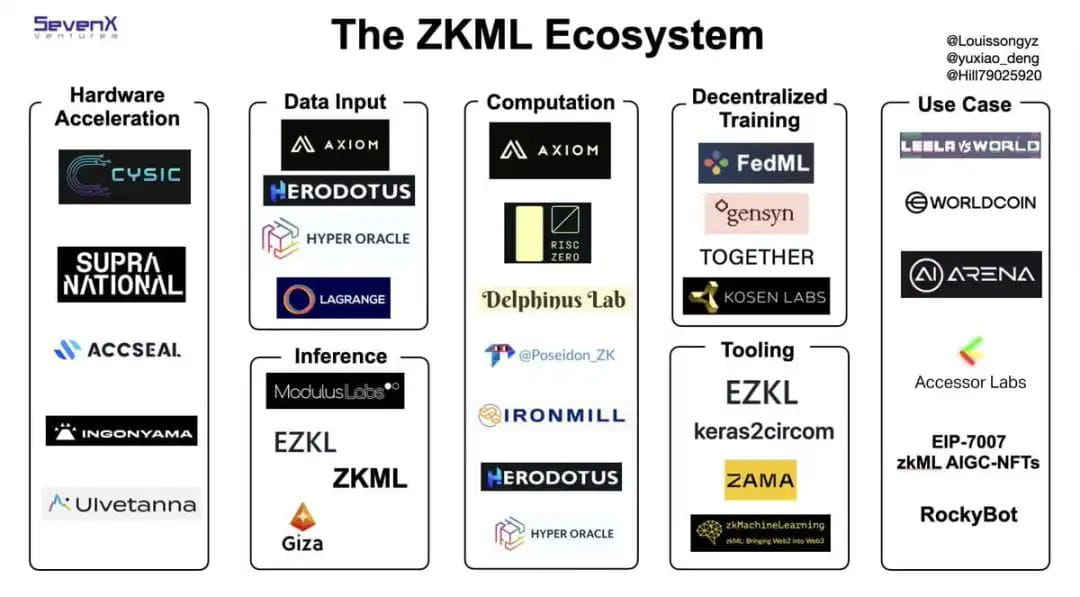
Projects like Polyhedra Network and the Protocol Engineering (PSE) initiative are leading the charge in zkML infrastructure. By enabling anyone to verify that an AI model was executed correctly, these solutions provide the technical foundation for compliant AI. For enterprises, this means moving beyond theoretical compliance to actionable, cryptographically secured assurance that their AI systems are both transparent and secure.
How ZKML Generates Audit Trails
Generating an audit trail in ZKML requires transforming a machine learning inference into a cryptographic proof that is both compact and instantly verifiable. This process shifts the burden of trust from opaque model weights to transparent, mathematically verified computations. For compliance professionals, this means the audit trail is not a static log of decisions, but a dynamic, privacy-preserving record of exactly how an AI arrived at its output.
The mechanism begins with the prover, which encodes the ML model’s architecture and the specific input data into a mathematical circuit. This circuit defines the constraints of the computation—every matrix multiplication and activation function must adhere to strict algebraic rules. Using ZK-SNARKs (Succinct Non-Interactive Arguments of Knowledge), the prover generates a proof attesting that the model executed correctly on the provided data without revealing the data itself or the model’s proprietary weights.
This proof is then sent to a verifier. Unlike traditional audit logs that require re-running the entire model to check for errors, a verifier can validate the ZK-SNARK proof in milliseconds. This instant verification ensures that the model executed the exact same logic on the same data, creating a tamper-proof audit trail. The result is a system where regulatory compliance is automated: the proof itself serves as the evidence of correct execution, preserving privacy while satisfying audit requirements.
Comparing ZKML to Traditional Auditing
Traditional compliance audits rely on manual code review and shadow testing, methods that are inherently slow and often require exposing proprietary model weights or sensitive training data to third-party auditors. In contrast, ZKML shifts the burden of proof from inspection to cryptographic verification. This distinction is critical for legal and compliance professionals who must balance regulatory transparency with intellectual property protection.
The table below outlines the operational differences between these two approaches across key compliance dimensions.
| Dimension | Traditional Audit | ZKML Verification |
|---|---|---|
| Data Privacy | High risk; requires data exposure for review | High; proofs verify computation without revealing data |
| Verification Speed | Slow; manual review takes weeks or months | Fast; automated proof generation in minutes |
| Model Secrecy | Low; weights often visible to auditors | High; model architecture and weights remain private |
| Regulatory Fit | Static; difficult to scale for real-time compliance | Dynamic; enables continuous, on-chain compliance monitoring |
The efficiency gain is not merely cosmetic. By eliminating the need to manually verify code lines or run shadow datasets, ZKML allows compliance checks to happen in near real-time. This is particularly valuable in high-stakes environments where regulatory deadlines are strict and the cost of manual audit labor is prohibitive. The preservation of model secrecy means that companies can prove their AI models are compliant without surrendering their competitive advantage to auditors or regulators.
Implementing ZKML for Compliance
Integrating zero-knowledge machine learning (ZKML) into a compliance stack requires shifting from reactive auditing to proactive cryptographic verification. For legal and technology teams, this means embedding proof generation directly into the inference pipeline rather than treating it as a post-hoc check.
1. Select a Proving Framework
Begin by choosing a ZKML framework that supports your specific model architecture. Academic research, such as the ACM framework for optimizing ML inference, demonstrates that modern systems can handle state-of-the-art vision models and large language models efficiently. Polyhedra Network offers production-ready tools that simplify this integration, allowing teams to generate proofs without building custom circuits from scratch.
2. Define the Verification Circuit
The core of ZKML is the circuit—a mathematical blueprint that defines what is being proven. Legal teams must work with engineers to specify the exact compliance criteria. Does the proof need to verify the model’s accuracy, the integrity of the training data, or simply that the model ran without tampering? Clear definitions here prevent scope creep and ensure the resulting proof is legally defensible.
3. Integrate with the Inference Engine
Connect the proving system to your existing AI inference infrastructure. This step involves wrapping the model execution so that every prediction generates a corresponding cryptographic proof. The goal is to make verification an automatic byproduct of the AI’s operation, ensuring that every decision made by the model is backed by a verifiable record.
4. Validate Proofs On-Chain or Off-Chain
Finally, establish how these proofs will be validated. On-chain verification offers maximum transparency and immutability, suitable for public audits. Off-chain validation may be preferred for privacy-sensitive applications, where proofs are verified by authorized parties without exposing the underlying data or computation to the public ledger.
Choose a framework like Polyhedra or an academic prototype that supports your model type. This determines the efficiency and cost of proof generation.
Collaborate with legal counsel to define the exact compliance rules encoded into the circuit. This ensures the cryptographic proof aligns with regulatory requirements.
Embed the proving system into the AI workflow so that every inference automatically generates a cryptographic proof of correct execution.
Decide on on-chain or off-chain verification based on privacy needs. On-chain offers public auditability, while off-chain preserves data confidentiality.
Frequently Asked Questions About ZKML
How does ZKML ensure data privacy during audits?
ZKML ensures data privacy by generating a cryptographic proof that validates the correctness of the AI's computation without revealing the underlying data or model weights. Auditors can verify that the model operated within approved parameters and on authorized data without ever accessing the sensitive information itself, satisfying privacy-by-design requirements.
What is the difference between on-chain and off-chain ZKML verification?
On-chain verification records the proof on a public blockchain, offering maximum transparency and immutability suitable for public audits. Off-chain verification keeps the proof and data private, verifying them only among authorized parties, which is preferred for sensitive corporate or personal data where public disclosure is not desired.
Why is ZKML considered a verification layer rather than a trading asset?
ZKML is a technical protocol designed to prove computational integrity and preserve privacy. It is not a cryptocurrency or speculative asset. Its value lies in its utility for regulatory compliance, allowing organizations to mathematically demonstrate that their AI systems are secure, transparent, and operating within legal boundaries.
No comments yet. Be the first to share your thoughts!