
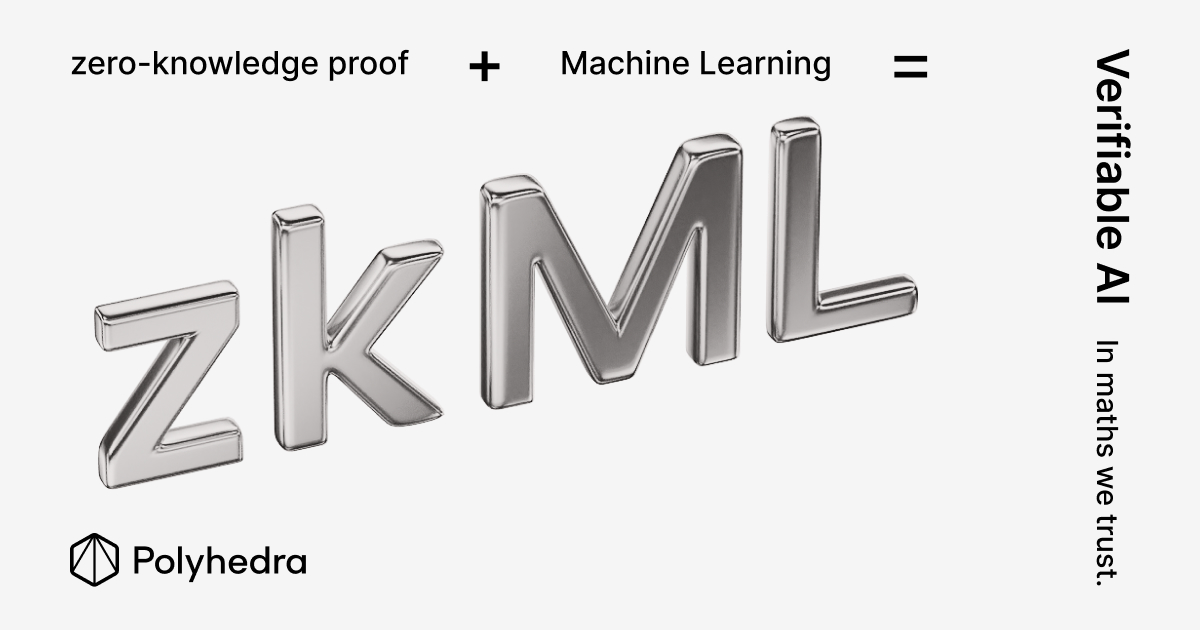
The ZKML verification gap
Enterprises face a fundamental contradiction in the age of generative AI. To maintain security and intellectual property rights, organizations must keep their proprietary models and sensitive training data hidden. However, to build trust with regulators, auditors, and customers, they must prove that these models are operating correctly and fairly.
Traditional AI systems are black boxes. When a bank uses an AI model to approve a loan or a hospital uses one to diagnose a patient, stakeholders need assurance that the decision was made according to specific rules and without bias. Currently, the only way to verify this is to expose the model architecture or the underlying data. This exposure creates an unacceptable risk of theft or privacy breaches.
This is the verification gap. Without a way to prove correctness without revealing secrets, companies remain stuck. They either sacrifice transparency for security or transparency for privacy, but never both. This trust deficit stifles adoption in high-stakes industries like finance and healthcare, where accountability is non-negotiable.
ZKML bridges this divide. By using zero-knowledge proofs, an AI system can generate a mathematical certificate that proves the output was generated by the correct model, without showing the model itself. This allows enterprises to maintain strict confidentiality while providing absolute proof of integrity. The technology transforms AI from a trusted-but-blind service into a verifiable, accountable asset.
How ZKML proves model integrity
Zero-knowledge machine learning (ZKML) bridges the gap between opaque AI inference and verifiable truth. By converting a neural network’s computation into a mathematical circuit, ZKML allows a prover to generate a succinct proof that an AI model executed correctly on specific inputs without revealing the model weights or the input data itself. This mechanism ensures that the output was not tampered with, providing cryptographic assurance of model integrity.
The process begins by translating the AI model’s operations—such as matrix multiplications and activation functions—into constraints that a zero-knowledge proof system, typically ZK-SNARKs, can verify. Once the circuit is defined, the prover runs the inference and generates a proof. This proof is small and can be verified on-chain or by any decentralized node in seconds, regardless of the model’s complexity. This efficiency is critical, as it allows lightweight clients to trust heavy computations performed by untrusted servers.
Recent frameworks like ZKML have optimized this translation process, enabling the verification of state-of-the-art vision models and even language models like distilled GPT-2. These systems use cost models to simulate circuit layouts, reducing the computational overhead required to generate proofs. As a result, ZKML is becoming a practical tool for auditing AI behavior in decentralized environments, where trust is distributed rather than centralized.
Enterprise adoption: where trust is mandatory
Zero-knowledge machine learning (ZKML) is moving from experimental research to critical infrastructure in sectors where data privacy and intellectual property protection are non-negotiable. Unlike traditional machine learning, where model weights and training data are often opaque, ZKML allows enterprises to prove the integrity of an AI decision without exposing the underlying sensitive information. This capability is reshaping how regulated industries handle compliance, audit trails, and proprietary algorithms.
Healthcare: compliant inference without data leakage
In healthcare, patient data is protected by strict regulations like HIPAA and GDPR. Traditionally, sharing patient data for research or external model inference created significant legal and privacy risks. ZKML enables hospitals to run diagnostic models on encrypted data or verify that an external AI used compliant training data, without ever revealing the patient records themselves. This allows for collaborative AI development while maintaining patient confidentiality and regulatory compliance.
Finance: protecting proprietary trading algorithms
Financial institutions rely heavily on machine learning for fraud detection, risk assessment, and algorithmic trading. These models represent significant intellectual property; competitors or malicious actors attempting to reverse-engineer the models could exploit the bank’s competitive advantage. ZKML allows banks to prove that a transaction is legitimate or that a risk model adheres to internal policy without exposing the proprietary algorithms to third-party auditors or regulators. This creates a verifiable audit trail that satisfies regulatory requirements while protecting trade secrets.
Supply chain: verifying ethical sourcing
Supply chain transparency is increasingly demanded by consumers and regulators. Companies need to prove that their products meet ethical labor and environmental standards. ZKML can be used to verify that AI-driven supply chain models are making decisions based on verified, unaltered data sources. For example, a retailer can prove that a product was flagged as compliant by an AI model trained on certified supplier data, without revealing the detailed supplier contracts or internal audit processes to the public. This builds consumer trust while protecting sensitive business relationships.
The shift from trust to verification
The adoption of ZKML in these sectors marks a fundamental shift from trusting institutions to verifying outcomes. As AI becomes more embedded in high-stakes decisions, the ability to prove that an AI acted correctly and ethically—without compromising privacy or IP—becomes a competitive advantage. Enterprises that adopt ZKML early will be better positioned to manage the complex regulatory landscape of 2026 and beyond.
ZKML Token Market Performance
The financial landscape for ZKML reflects a project in its early developmental stages, characterized by low liquidity and emerging market interest. As of the latest data, the token trades at approximately $0.007604, with a market capitalization hovering around $733,753. This valuation places it firmly in the micro-cap category, where price movements can be significant relative to the small volume of assets traded.
Trading volume remains a critical metric for assessing the health of the ZKML network's economic layer. Recent 24-hour volume data indicates periods of minimal activity, which is common for niche privacy-preserving AI tokens before broader adoption. The token has shown modest volatility, with a 1.93% increase in the last 24 hours, suggesting cautious but steady interest from early adopters.
The role of the ZKML token extends beyond simple speculation. It serves as the primary incentive mechanism for network participation, rewarding nodes that provide computational resources for zero-knowledge proof generation. This utility-driven demand is intended to stabilize the token's value over time as the network scales and more AI models require verification.
To understand ZKML's position relative to the broader market, it is useful to compare its metrics against other privacy-focused AI projects. The table below highlights key differences in market cap and trading activity, providing context for investors evaluating exposure to the ZKML ecosystem.
| Project | Market Cap | 24h Volume |
|---|---|---|
| ZKML | $733,753 | $0 |
| Phala Network | $150,000,000 | $5,000,000 |
| Ocean Protocol | $300,000,000 | $10,000,000 |
Key questions on ZKML and ZKPs
The intersection of zero-knowledge proofs and machine learning introduces terminology that often overlaps with crypto asset naming, creating confusion for investors and developers alike. It is important to distinguish the underlying cryptographic protocol from any associated digital tokens. Zero-knowledge machine learning (zkML) is a method for verifying AI computations without revealing the model’s weights or the input data. This verification ensures that the output provided by an AI model is accurate and has not been tampered with, a critical requirement for high-stakes applications in finance and healthcare.
Conversely, zKML (often stylized with a lowercase 'k' in token contexts) refers to a specific cryptocurrency asset. This token is distinct from the technology it is named after. The token’s market performance, including its price and trading volume, is driven by speculative market dynamics rather than the technical adoption of the zkML protocol. While the technology aims to solve trust issues in AI, the token operates in the broader crypto market, subject to the same volatility and liquidity risks as other altcoins.
Is zero-knowledge proof legit?
Yes, zero-knowledge proofs (ZKPs) are a legitimate and rigorously tested branch of cryptography. They are not experimental concepts but established mathematical protocols used to prove the validity of statements without revealing the underlying information. Major blockchain networks, including Zcash and Ethereum (via its rollup solutions), rely on ZKPs for privacy and scalability. The technology is backed by decades of academic research and practical implementation in secure systems.
What is zk in crypto?
In the context of cryptocurrency, "zk" stands for zero-knowledge. It refers to the cryptographic method used to verify transactions or data integrity. When applied to machine learning (zkML), it allows users to verify that an AI model produced a specific result based on specific inputs, without exposing the proprietary model or sensitive user data. This is distinct from the token ticker, which is simply a market label.
What is the current price of zKML coin?
The price of the zKML token fluctuates based on market demand. As of the latest data, the token trades around $0.007604 USD, with a market capitalization of approximately $733,753. Investors should note that this price reflects the token’s market value, not the valuation or utility of the zkML technology itself.
No comments yet. Be the first to share your thoughts!