
Zkml limits to account for
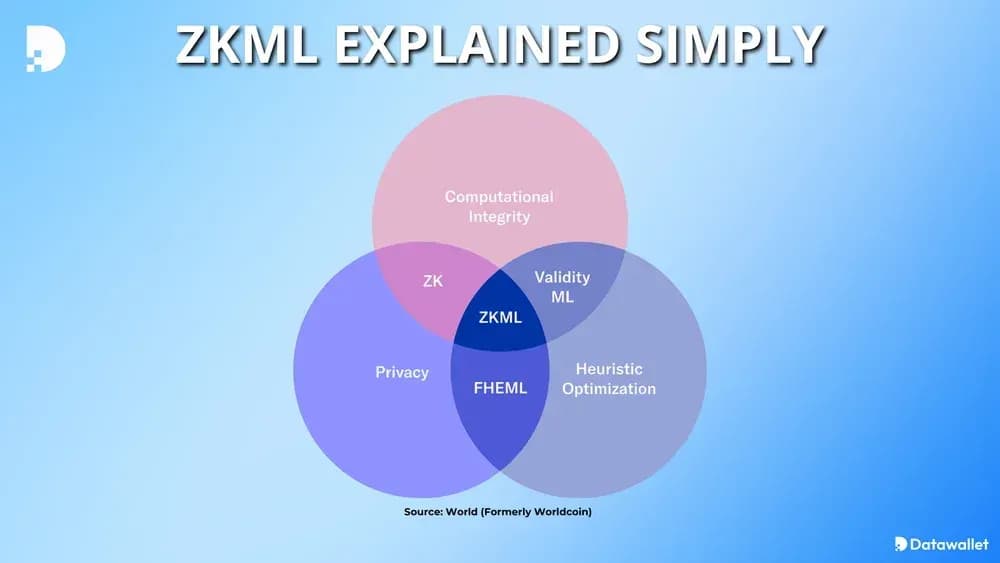
Zero-knowledge machine learning (zkML) adds a cryptographic layer to AI models, allowing you to verify that a specific model executed a specific input without revealing the model weights or the data itself. Think of it as a sealed envelope for your computation: the verifier checks the seal and the output, but never opens the envelope to see the ingredients inside. This capability is essential for high-stakes environments where model integrity and data privacy are non-negotiable.
The primary constraint lies in the computational overhead. Generating a zero-knowledge proof for a complex neural network is significantly more expensive and time-consuming than running the model itself. While inference might take milliseconds, generating the proof can take seconds or minutes depending on the circuit size. This tradeoff means zkML is currently best suited for high-value, low-frequency decisions rather than real-time, high-throughput applications.
Despite the performance cost, the security guarantees are robust. By converting the ML model into a constraint system (often using SNARKs or STARKs), you create a mathematical proof that can be verified instantly by anyone. This shifts the trust model from "trust the provider" to "trust the math," which is critical for regulatory compliance and audit trails in finance and healthcare. As the ecosystem matures, tooling like Worldcoin's ZKML framework is helping developers navigate these complexities more efficiently.
ZKML Tradeoffs: What to Evaluate
Adopting zkML is not a simple plug-and-play decision. It introduces a distinct set of engineering and operational constraints that differ sharply from traditional AI governance. Before committing to a zkML infrastructure, you must weigh the computational overhead against the need for cryptographic verification.
The primary tradeoff lies in the cost of proof generation. Creating a zero-knowledge proof for a neural network inference is computationally intensive. While it ensures model integrity, it can significantly increase latency and server costs compared to standard API calls. This makes zkML less suitable for high-frequency, low-latency applications unless specialized hardware or optimized circuits are used.
Another critical factor is the complexity of the model itself. Not all machine learning operations translate efficiently into zero-knowledge circuits. Linear layers and simple activations are straightforward to prove, but complex operations like attention mechanisms in large language models (LLMs) require significant optimization. If your model relies heavily on these complex layers, the proof generation time may become prohibitive.
Finally, consider the ecosystem maturity. zkML is still an emerging field with fewer standardized tools compared to traditional ML pipelines. You may need to invest in custom development to integrate zkML into your existing stack. This upfront investment is offset by the long-term benefit of verifiable AI, but it requires a team comfortable with both cryptography and machine learning.
| Factor | ZKML | Traditional AI | Impact |
|---|---|---|---|
| Proof Generation | High computational cost | None | Increases latency |
| Model Complexity | Limited by circuit design | Unlimited | Requires optimization |
| Verification | Cryptographic guarantee | Trust-based | Higher security |
| Ecosystem | Emerging, custom tools | Mature, standardized | Higher dev effort |
The decision to use zkML should be driven by the specific risk profile of your AI application. If your use case requires absolute proof of model integrity and you can absorb the computational costs, zkML offers a compelling advantage. However, for applications where speed and simplicity are paramount, traditional AI methods may still be more practical.
How to verify AI model integrity with ZKML
Zero-knowledge machine learning transforms how we audit AI systems by allowing models to prove their outputs are correct without revealing the underlying data or weights. Instead of trusting a black box, you verify the computation itself. This framework turns abstract governance promises into concrete, mathematically verifiable checks.
To implement zkML effectively, follow this decision framework to select the right tools and verify integrity at scale.
Start by selecting a framework that supports your model type. Tools like Worldcoin’s awesome-zkml repository provide open-source templates for constructing proofs of ML model execution using ZK-SNARKs. These frameworks handle the heavy lifting of converting model operations into arithmetic circuits, which is the foundation of the proof.
Your model must be translated into a format that zero-knowledge proofs can understand. This involves converting standard machine learning operations into arithmetic circuits. Most frameworks support common architectures like ResNet or Transformer blocks. Ensure your model’s precision (e.g., FP16 vs. INT8) is compatible with the circuit constraints, as higher precision increases proof generation time significantly.
Once the circuit is set, generate the proof for your model’s inference. The proof attests that the output was computed correctly from the given inputs and weights. Verification is fast and cheap, allowing you to embed these proofs on-chain or in audit logs. This step is where you confirm the model hasn’t been tampered with and that the inference matches the expected behavior.
Finally, connect the verification layer to your governance policies. Use smart contracts or audit trails to enforce rules based on proof validity. For example, automatically reject any inference that fails verification or flag models that haven’t been updated with the latest proof. This creates a continuous loop of accountability, ensuring that the AI system remains compliant with regulatory and ethical standards.
Spotting Weak ZKML Claims
Not every project touting zero-knowledge machine learning actually delivers verifiable integrity. The space is crowded with buzzwords, but few solutions offer the cryptographic guarantees needed for true AI governance. Before integrating these tools, you need to separate marketing hype from functional proof systems.
The most common mistake is accepting "ZKML" as a blanket term. Some vendors simply wrap standard encryption around their models and label it ZKML. Real ZKML requires generating a zero-knowledge proof that the model executed correctly on specific data without revealing the data itself. If a provider cannot demonstrate this proof generation, the claim is misleading.
Another red flag is ignoring the computational tradeoffs. Generating ZK proofs for large language models is computationally expensive. Solutions that promise instant verification for massive models often sacrifice accuracy or rely on trusted setups that undermine decentralization. Always check if the proof system is transparent and scalable.
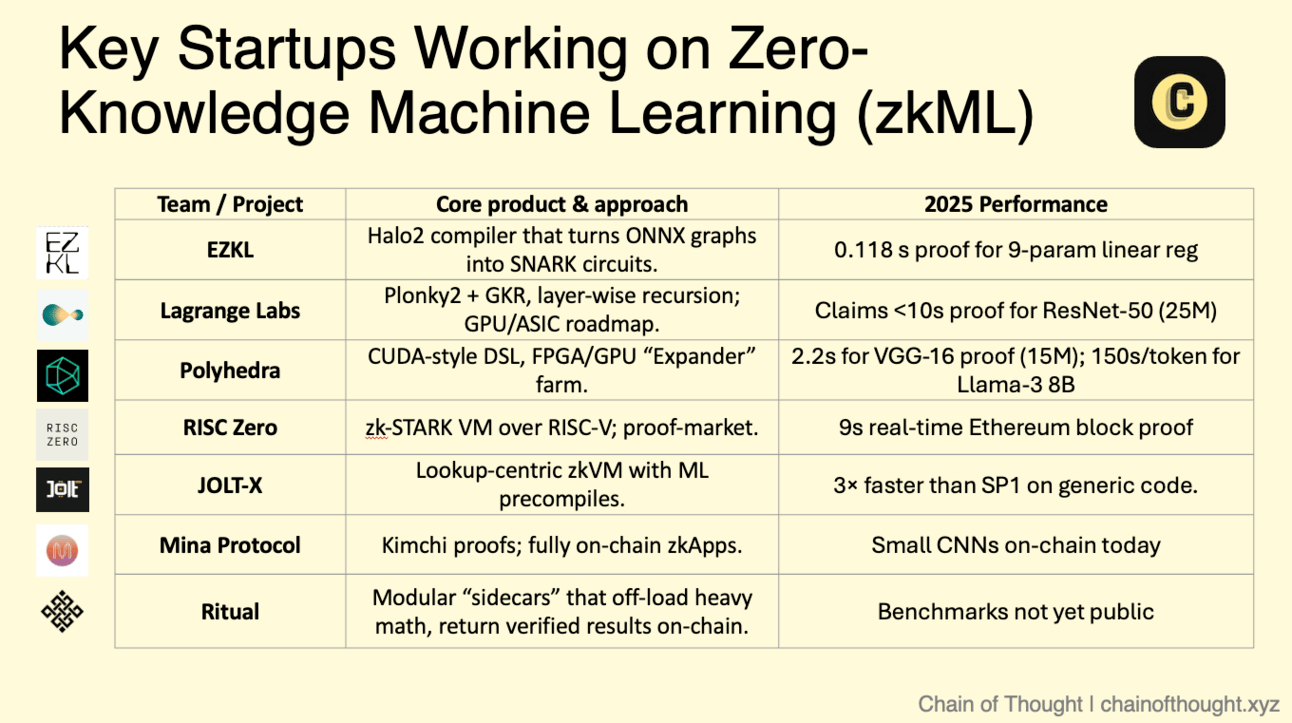
Look for projects that publish their proof generation times and verification costs. Reputable frameworks like those in the Worldcoin ZKML repository provide open-source tools for constructing these proofs. If a product hides its technical architecture or lacks third-party audits, treat it as a weak option until proven otherwise.
No comments yet. Be the first to share your thoughts!