
What is ZKML?
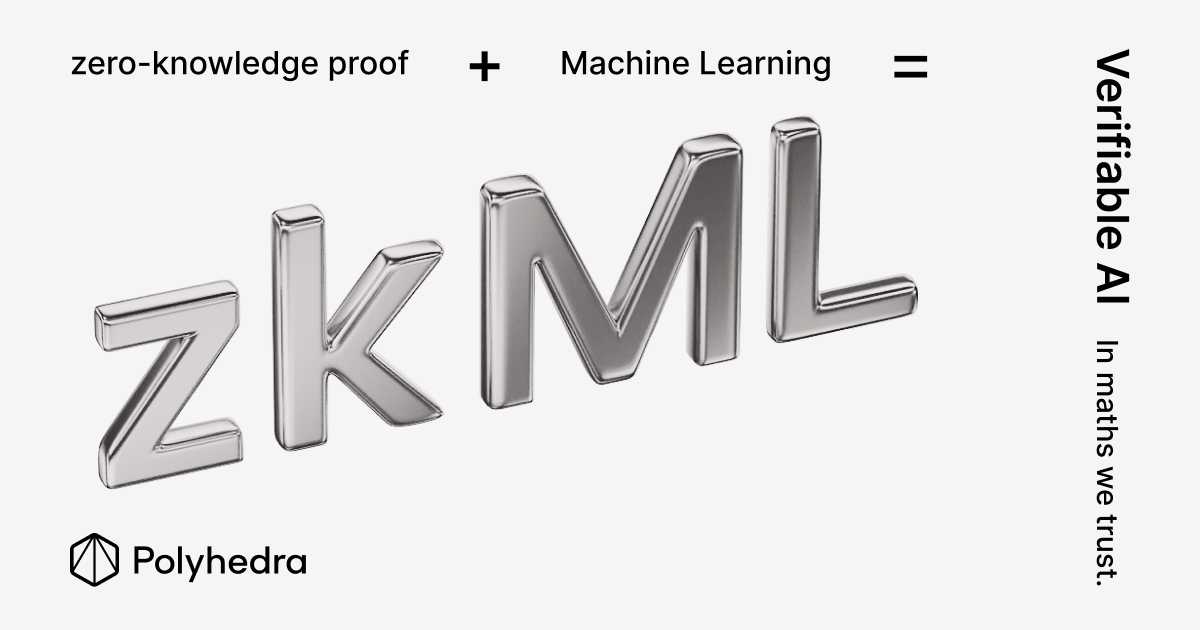
Zero-Knowledge Machine Learning (ZKML) combines zero-knowledge proofs with machine learning to verify computations without revealing the underlying data or model weights. In practical terms, it allows a system to prove that a specific AI model ran correctly on a specific dataset, while keeping the inputs and the proprietary model architecture private.
This capability addresses a critical gap in AI deployment. Traditional machine learning models are often "black boxes," making it difficult for regulators and auditors to verify compliance or accuracy. ZKML shifts this dynamic by providing cryptographic evidence of correctness. As noted in academic frameworks like the ZKML system for ML inference, this technology enables the generation of ZK-SNARKs for realistic models, including vision models and language models, ensuring verifiability without sacrificing confidentiality [1].
The primary use cases for ZKML include regulatory compliance, intellectual property protection, and secure multi-party computation. By using zero-knowledge proofs, organizations can demonstrate that their AI decisions adhere to specific rules or datasets without exposing sensitive information. This is particularly valuable in high-stakes industries like finance and healthcare, where data privacy and model integrity are paramount [2].
Choosing a ZKML Implementation
Choosing a ZKML implementation requires balancing proof generation speed, verification cost, and model compatibility. There is no single "best" framework; the right choice depends on whether you prioritize developer ease, cryptographic efficiency, or hardware acceleration.
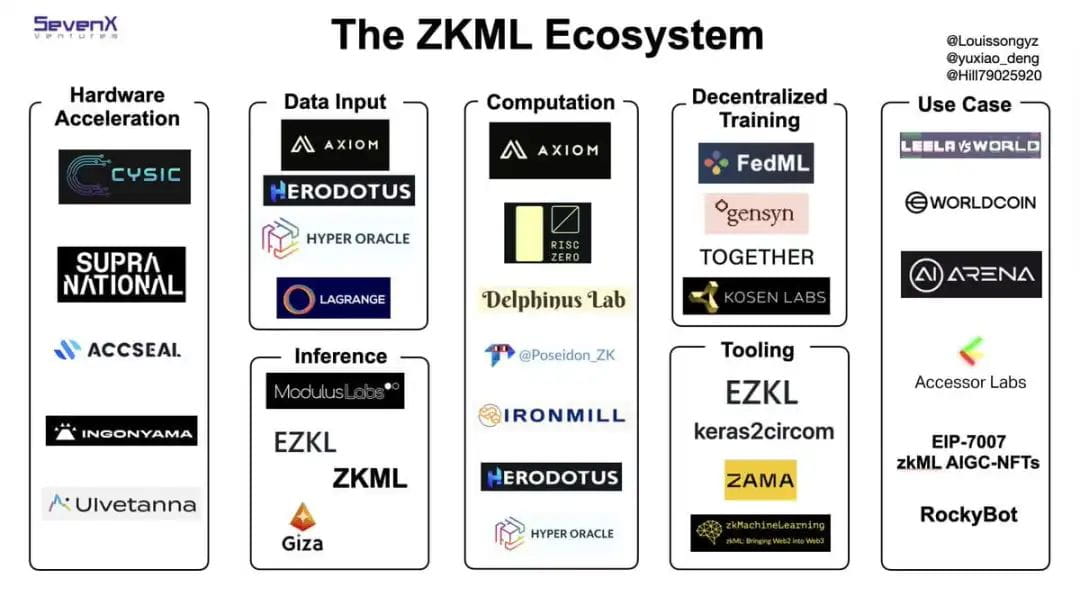
The landscape currently splits between general-purpose compilers and specialized hardware accelerators. General frameworks like those built on ZK-SNARKs offer flexibility for various ML architectures but often suffer from high proving times. Hardware-specific approaches, such as those leveraging GPUs or FPGAs, can drastically reduce latency but may lock you into specific hardware vendors or complex deployment pipelines.
When evaluating tradeoffs, focus on three concrete factors: the proof system’s throughput, the supported model layers, and the verification overhead. A system that supports only linear layers is insufficient for modern transformers, while one that requires expensive GPU clusters may not be viable for decentralized verification.
| Feature | General ZK-SNARK Compilers | Hardware-Accelerated Provers |
|---|---|---|
| Proving Speed | Slow (minutes to hours) | Fast (seconds to minutes) |
| Verification Cost | Low (cheap on-chain) | Low to Medium |
| Model Support | Broad (CNNs, RNNs, Transformers) | Limited (often linear/conv only) |
| Hardware Dependency | CPU/GPU agnostic | Requires specific GPU/FPGA |
| Development Complexity | High (compiler tuning) | Medium (integration heavy) |
Data synthesized from academic benchmarks and open-source framework documentation (ACM, Kudelski Security).
The choice between a general compiler like zkml (ddkang) and a hardware-optimized stack depends on your scale. For small-scale, high-security audits, general compilers provide transparency. For high-frequency inference where latency matters, hardware acceleration becomes necessary despite the integration cost. Always test with your specific model architecture before committing to a stack.
How to Choose the Right ZKML Approach
ZKML is not a single product but a set of cryptographic tools for proving that a machine learning model ran correctly without revealing the input data or the model weights. For legal and compliance teams, the decision framework depends on three factors: the sensitivity of the data, the complexity of the model, and the need for real-time verification.
The following steps outline how to evaluate ZKML solutions against your specific regulatory and operational constraints.
Determine what needs to be proven. In high-stakes compliance, the goal is often to prove that a model used specific, non-biased data and followed a regulated algorithm. ZKML allows you to verify the output of a "black box" model without exposing the proprietary weights or the private user data that fed it. This is distinct from traditional auditing, which requires full access to the model internals.
Not all models are equally suited for zero-knowledge proofs. Simple linear models or small neural networks can be proven quickly. However, large language models (LLMs) or complex vision transformers require significant computational resources to generate proofs. Evaluate whether your use case can tolerate the latency of proof generation. If real-time inference is required, you may need a hybrid approach where heavy computation is done off-chain, and only the final verification hash is checked on-chain or by a trusted verifier.
Different frameworks offer different privacy guarantees. Some focus on data privacy (verifying the input was private), while others focus on model privacy (verifying the output was generated by a specific model). Kudelski Security notes that ZKML combines zero-knowledge proofs with machine learning to create verifiable AI. Choose a framework that aligns with your primary risk: if data leakage is the main concern, prioritize data-private ZKML; if model theft is the risk, prioritize model-private ZKML.
Spotting Weak ZKML Claims
ZKML solves a specific compliance problem: proving an AI model ran correctly without revealing the underlying data or weights. However, the space is crowded with misleading marketing. Before trusting a vendor, check for these common pitfalls.
"Instant" Proofs Are Mythical
Some vendors promise sub-second verification for complex models like Vision Transformers. This ignores the heavy computational cost of generating ZK-SNARKs for high-dimensional tensors. If a proof takes minutes to generate, it is not suitable for real-time inference. Look for frameworks like the ACM-published ZKML system, which optimizes for realistic ML models but still requires significant compute.
Missing the Verification Step
A common mistake is focusing only on proof generation. The real value lies in the verification step. If a vendor does not provide a lightweight, open-source verifier that runs in under a second, the system is useless for on-chain or edge deployment. Demand to see the verification latency, not just the generation time.
No Model Specificity
Generic "ZK for AI" claims often hide the fact that the system only supports simple linear regressions. Real-world compliance requires support for complex architectures. Check if the solution handles state-of-the-art vision models or distilled LLMs. If the vendor cannot specify the exact model layers they support, they are likely overselling.
Weak Proof Systems
Not all zero-knowledge proofs are created equal. zk-SNARKs are efficient but require a trusted setup, which introduces a single point of failure. zk-STARKs are transparent but slower. Ensure the vendor explains their tradeoffs. For high-stakes compliance, transparency often outweighs speed. Ask if they use a trusted setup and how they mitigate the associated risks.
No comments yet. Be the first to share your thoughts!