
What zero-knowledge machine learning actually does
Zero-knowledge machine learning (ZKML) is a cryptographic protocol where a party computes an output on an AI model and simultaneously generates a proof that the computation was performed correctly. This system allows anyone to verify the result without ever seeing the underlying model weights or the input data.
In traditional AI, trust is assumed. You hand your data to a black box and accept the output. ZKML changes this dynamic by making verification mathematically rigorous. The prover generates a succinct proof that the model ran exactly as intended on the provided inputs. The verifier checks this proof and accepts the result, remaining completely ignorant of the internal mechanics.
This distinction separates ZKML from general privacy tech like homomorphic encryption. Homomorphic encryption allows computation on encrypted data but still requires the user to decrypt the result. ZKML focuses on verification: it proves the output is correct without necessarily keeping the data encrypted during the entire process, though it ensures neither the model nor the data is exposed to the verifier.
The value proposition is clear. A decentralized lending platform can use ZKML to verify a borrower’s credit score exceeds a threshold without revealing their financial history. A healthcare provider can verify a diagnostic prediction without exposing patient records or proprietary algorithms. ZKML turns AI from a trust-based service into a verifiable utility.
The enterprise trust gap in AI deployment
Enterprises face a paradox when deploying high-stakes AI models: they need to verify model integrity without exposing proprietary intellectual property or sensitive customer data. Traditional verification methods—such as open-weight models or standard audit logs—leave critical vulnerabilities. If a model is open, competitors can reverse-engineer the architecture. If it is closed, regulators and auditors must take the provider’s word that the model behaves as promised.
This lack of transparency creates significant risk in regulated industries like finance and healthcare. Consider a decentralized lending platform evaluating creditworthiness. Without zero-knowledge machine learning (zkML), the platform must either trust the lender’s proprietary scoring model entirely or demand access to the borrower’s raw financial data, violating privacy principles. zkML bridges this gap by generating cryptographic proofs that verify the model’s output is correct without revealing the underlying computations or the training data itself.
The stakes extend beyond privacy. Model poisoning and adversarial attacks can silently corrupt AI decisions. In a high-stakes environment, a single compromised inference can lead to regulatory fines or catastrophic financial loss. Enterprises need a standard where verification is mathematically guaranteed, not just procedurally audited. This shift from "trust the provider" to "verify the proof" is essential for scaling AI in secure, compliant environments.
How ZKML Proofs Verify Model Integrity
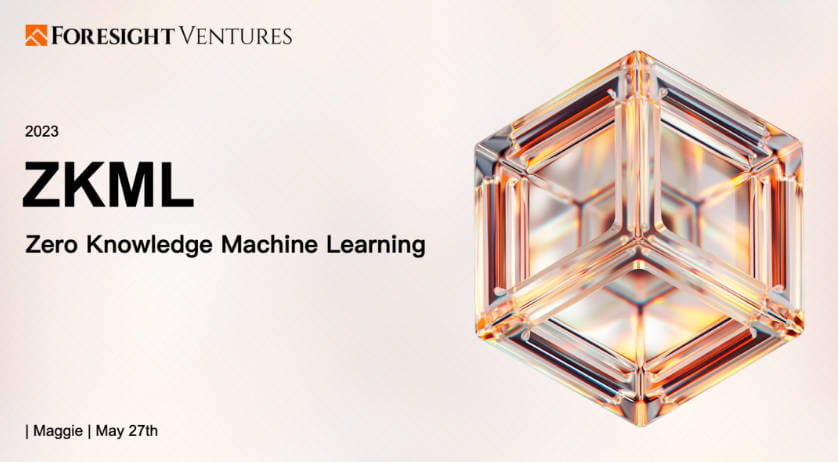
Verifying an AI model's integrity in ZKML requires translating complex machine learning operations into a format that zero-knowledge cryptography can process. Since neural networks rely on floating-point arithmetic and non-linear activation functions, they cannot be directly proven using standard arithmetic circuits. Instead, the model's inference process is broken down into a series of basic mathematical constraints.
Translating Inference into Arithmetic Circuits
The first step is converting the ML model into an arithmetic circuit. This involves mapping every matrix multiplication, addition, and activation function to a set of algebraic constraints. For example, a ReLU activation function is encoded as a quadratic constraint that ensures the output is either the input value or zero, depending on the sign. This translation allows the entire neural network to be represented as a system of polynomial equations that a prover can evaluate.
Generating the ZK-SNARK Proof
Once the model is represented as an arithmetic circuit, the prover uses the circuit's public parameters to generate a ZK-SNARK proof. This proof demonstrates that the model executed the correct operations on the given inputs without revealing the inputs themselves or the model's internal weights. The verifier can then check the proof using a small amount of computational power, confirming the model's integrity and the validity of its output.
Ensuring Trustless Verification
The result is a trustless verification system. Stakeholders can confirm that an AI model has not been tampered with and that its predictions are based on the original, unmodified weights. This is particularly valuable in decentralized applications where model integrity is critical, such as in decentralized finance or healthcare, where data privacy and model authenticity are paramount.
- Constraint Satisfaction: The model's operations are converted into a set of polynomial constraints that must be satisfied.
- Proof Generation: The prover creates a cryptographic proof that these constraints are met for the specific input.
- Lightweight Verification: The verifier checks the proof with minimal computational overhead, ensuring efficiency.
ZKML in finance and healthcare
Zero-knowledge machine learning is moving from theoretical cryptography to tangible infrastructure. In finance, it solves the data privacy paradox: institutions need to verify risk without exposing raw financial history. A decentralized lending platform, for example, can verify a borrower’s credit score meets a specific threshold. This generates a cryptographic proof of eligibility without revealing the borrower’s income, transaction history, or the proprietary model used to calculate the score.
The healthcare sector faces a similar constraint. Hospitals and research centers hold valuable diagnostic data but are bound by strict privacy regulations like HIPAA. ZKML allows medical AI to verify a diagnosis or treatment recommendation against a trained model without exposing the patient’s electronic health records. This enables collaborative model training and verification across institutions while keeping sensitive patient data siloed and secure.
The difference between traditional AI verification and ZKML verification is structural. Traditional models are often black boxes that require trusting the provider with both the data and the logic. ZKML shifts this trust to mathematical proof.
| Feature | Traditional AI | ZKML Verification |
|---|---|---|
| Data Privacy | Data shared with model provider | Data remains private; only proof shared |
| Model Transparency | Black box; opaque logic | Mathematically proven execution |
| Verification Method | Trust in provider reputation | Cryptographic zero-knowledge proof |
This shift allows for a new class of auditable AI. Instead of relying on the word of a model provider that their system is fair or accurate, users can verify the integrity of the computation itself. As regulatory pressure increases, this capability becomes less of a luxury and more of a compliance requirement.
ZKML token market and investor outlook
The market for ZKML tokens reflects a high-risk, high-reward environment typical of early-stage cryptographic infrastructure. As a niche asset class, liquidity remains thin compared to major layer-1 blockchains. Investors are currently pricing in the long-term potential of zero-knowledge proofs in AI verification, rather than immediate revenue generation. This speculative nature means price action is often driven by broader crypto sentiment and specific protocol upgrades rather than traditional financial metrics.
Live market data provides the most accurate snapshot of current valuation. The following widget tracks the real-time price of the ZKML token against USD, sourced from CoinMarketCap.
Trading activity for ZKML is concentrated on decentralized exchanges, with Uniswap V2 on Ethereum serving as a primary hub. Recent 24-hour volumes hover around $523, indicating limited institutional participation at this stage. Traders should note that low liquidity can lead to significant slippage on larger orders. The asset is often paired with WETH, making Ethereum gas fees a consideration for frequent traders.
For those analyzing the broader technical landscape, the chart below displays the daily price action for a related market proxy, helping to contextualize ZKML's volatility against general market trends. Note that ZKML itself may not have a direct TradingView symbol with sufficient depth; this chart illustrates the volatility profile of similar mid-cap crypto assets.
Key questions about ZKML adoption
What is ZKML crypto?
ZKML (Zero-Knowledge Machine Learning) is a cryptographic protocol that allows parties to verify the output of an AI model without exposing the underlying data or the model’s proprietary weights. The party computing the result generates a zero-knowledge proof (ZKP) that the AI processed the input correctly according to its rules. This bridges the gap between opaque "black box" AI and the transparency required for decentralized trust.
What is a real-world ZKML application?
A primary use case is decentralized finance (DeFi). For example, a lending platform can evaluate a borrower’s creditworthiness. The system generates a proof verifying the borrower’s score exceeds a threshold without revealing their financial history or the specific credit model used. This protects user privacy while enabling trustless lending decisions on-chain.
Where can I buy ZKML?
ZKML tokens are primarily traded on decentralized exchanges (DEXs). The most active trading pair is ZKML/WETH on Uniswap V2 (Ethereum). As of today, the live price is approximately $0.007428 USD. Traders should verify liquidity and volume directly on the exchange interface before executing trades.
Is zero-knowledge proof legit?
Yes, zero-knowledge proofs are a mathematically rigorous field of cryptography. They are not experimental concepts but established protocols used in high-stakes environments. For instance, Zcash uses zk-SNARKs for private transactions, and major blockchain infrastructure projects rely on ZKPs for scalability. The legitimacy lies in the verifiable mathematics, not in marketing claims.
No comments yet. Be the first to share your thoughts!