
Why enterprises need verifiable AI
The transition from opaque, black-box AI models to auditable systems is no longer a technical luxury; it is a regulatory necessity. In high-stakes sectors like finance and healthcare, the inability to verify how an AI reached a decision creates unacceptable liability. Enterprises are moving away from trusting model outputs implicitly and are instead demanding cryptographic proof of integrity.
For financial institutions, this shift is critical. A model that cannot prove its inputs were not tampered with or its logic was not altered post-training cannot be deployed in risk management or fraud detection workflows. Zero-knowledge machine learning (ZKML) provides this proof, allowing enterprises to validate AI computations without exposing proprietary algorithms or sensitive customer data.
The business case rests on three pillars: compliance, security, and trust. Without verifiable AI, organizations remain exposed to regulatory fines and reputational damage. ZKML transforms AI from a "trust me" service into a mathematically provable utility, aligning artificial intelligence with the rigorous standards required by enterprise decision-makers.
How ZK proofs secure machine learning inference
Generating cryptographic proofs for machine learning inference requires translating complex neural network operations into mathematical circuits. This process, often referred to as proving, involves encoding the model’s weights and the input data into a format that a zero-knowledge system can verify. The goal is to create a succinct proof that confirms the computation was executed correctly without exposing the underlying data or the proprietary model architecture.
The technical mechanism relies on converting arithmetic operations into constraints. Each layer of a neural network, from matrix multiplications to activation functions, must be mapped to a set of algebraic equations. These equations define the valid states of the computation. When the prover runs the model, it generates a proof that attests to the satisfaction of these constraints. This ensures that the output is the legitimate result of the specific model running on the specific input.
To make this feasible for enterprise scale, systems like ZKML optimize the circuit generation process. Traditional methods often struggle with the computational overhead of proving large models. New frameworks address this by reducing the number of constraints and improving the efficiency of the proof generation. This allows for the verification of state-of-the-art vision models and language models without requiring prohibitive amounts of computational power.
The result is a trustless verification layer. Stakeholders can verify the integrity of an AI decision without needing to trust the provider or inspect the raw data. This capability is critical for regulated industries where auditability and privacy are mandatory. The proof serves as a cryptographic guarantee that the AI behaved as intended, bridging the gap between opaque machine learning and transparent enterprise governance.
Leading platforms for ZKML integration
Enterprise adoption of zero-knowledge machine learning (ZKML) relies on infrastructure that balances developer accessibility with institutional-grade security. The current landscape is defined by a divergence between centralized exchanges (CEXs) offering immediate liquidity and decentralized exchanges (DEXs) providing native composability for privacy-preserving models.
For organizations requiring immediate market access, major CEXs like Bitget, Coinbase, and Kraken have established dedicated trading pairs for ZKML-related assets. These platforms provide the necessary fiat on-ramps and deep order books required for large-scale institutional positioning. Bitget, for instance, has positioned itself as a primary gateway for US-based traders seeking compliant exposure to ZKML tokens, offering integrated educational resources and risk management tools that simplify the entry process for non-technical stakeholders.
Conversely, decentralized infrastructure is critical for the actual execution of ZKML proofs. Platforms like dYdX and Uniswap allow for the trading of ZKML tokens without counterparty risk, ensuring that the assets underpinning these AI models remain censorship-resistant. This duality—centralized liquidity for entry and decentralized custody for security—forms the backbone of the current ZKML ecosystem.
The following comparison highlights the primary venues for ZKML integration, evaluating them on liquidity depth, fee structures, and regulatory standing.
| Platform | Type | Liquidity | Fee Structure | Regulatory Standing |
|---|---|---|---|---|
| Bitget | CEX | High | 0.1% Maker / 0.1% Taker | KYC Required |
| Coinbase | CEX | Very High | 0.4% - 0.6% | US Regulated |
| dYdX | DEX | Medium | 0.02% Maker / 0.05% Taker | Non-Custodial |
| Uniswap | DEX | High | 0.05% - 0.30% | Permissionless |
Market outlook and price trajectory for 2026
ZKML’s market performance in 2026 reflects a broader consolidation phase for zero-knowledge infrastructure tokens. As enterprise adoption of verifiable AI accelerates, the token’s valuation is increasingly tied to network utility rather than speculative momentum. Current market data suggests a moderate correction, with projections indicating a year-end price of approximately $0.01126, representing a 19.65% decline from earlier peaks. This trajectory aligns with the wider crypto market’s maturation, where utility-driven assets face stricter scrutiny regarding actual usage metrics.
Long-term forecasts remain cautiously optimistic, with some models predicting a recovery to $0.048 by 2030, contingent on sustained enterprise integration. The divergence between short-term volatility and long-term utility highlights the importance of monitoring technical adoption trends. Investors and analysts are advised to focus on on-chain activity and partnership announcements rather than short-term price fluctuations. The token’s ability to maintain relevance in the ZKML ecosystem will likely dictate its stability in the coming quarters.
Technical indicators suggest a neutral-to-bearish trend in the near term, with moving averages consolidating around key support levels. While the 200-day moving average has shown signs of stabilization, the 50-day average remains under pressure. This technical setup indicates that any significant upward movement will require a catalyst, such as a major protocol upgrade or a high-profile enterprise deployment. Until then, the asset is expected to trade within a defined range, reflecting the cautious sentiment among institutional participants.
Steps to integrate ZKML into your stack
Adopting zero-knowledge machine learning (ZKML) requires a shift from traditional model auditing to cryptographic verification. This process ensures that AI inferences remain private while maintaining mathematical proof of their integrity. For enterprise teams, the integration follows a structured path from protocol selection to production deployment.
Evaluate frameworks like Polyhedra Network or Worldcoin’s open-source repositories. Compare their support for specific neural network architectures (e.g., ResNet, Transformers) against your existing model requirements. Prioritize protocols with active developer communities and documented enterprise case studies to ensure long-term stability.
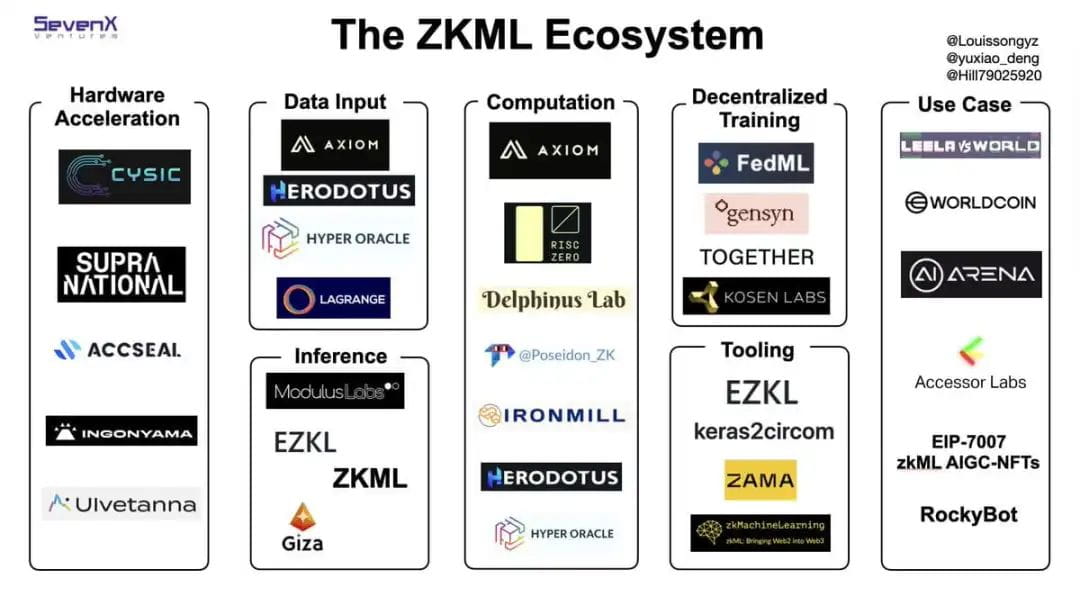
Standard deep learning models often rely on non-differentiable operations or floating-point arithmetic that are computationally expensive to prove. Refactor your model to use integer arithmetic or fixed-point representations. This adaptation reduces the proof generation time and lowers the computational overhead required for verification on-chain or off-chain.
Implement a proof generation pipeline using the selected protocol’s SDK. Run inference on your adapted model to generate a ZK-proof that attests to the correctness of the output. Verify this proof using the protocol’s verifier contract or local verification library. Ensure the verification process is optimized for latency to meet enterprise SLAs.
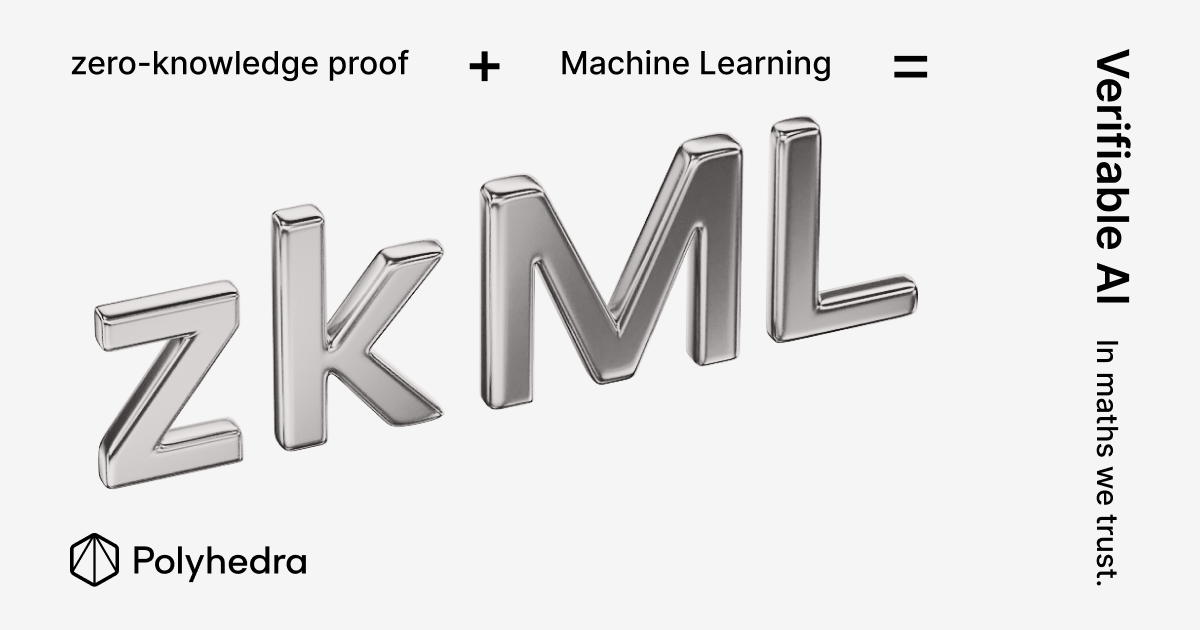
Embed the verification logic into your application’s backend or smart contract layer. Replace traditional model output endpoints with ZKML-verified endpoints. This integration allows downstream systems to trust the AI’s decision without needing access to the underlying model weights or sensitive input data.
Conduct rigorous security audits of your ZKML implementation, focusing on the proof generation and verification circuits. Monitor proof generation times and gas costs (if applicable) in production. Establish fallback mechanisms for edge cases where proof generation fails or exceeds time limits.
Frequently asked questions about ZKML
Is ZKML the same as Zcash?
No. ZKML (Zero-Knowledge Machine Learning) is a cryptographic protocol for verifying AI computations, whereas Zcash is a privacy-focused cryptocurrency. While both utilize zero-knowledge proofs, their applications differ fundamentally: one secures data integrity in AI models, while the other anonymizes financial transactions.
How does ZKML relate to other zk-privacy coins?
ZKML shares its underlying mathematical toolkit—zk-SNARKs and zk-STARKs—with privacy coins like Zcash and Monero. However, ZKML applies these proofs to machine learning inference and training data rather than transactional history. This distinction allows enterprises to validate AI outputs without exposing proprietary datasets, a use case distinct from the anonymity provided by traditional privacy coins.
Will ZKML coins see significant growth in 2026?
Market predictions for 2026 vary, with some analysts projecting a neutral to bullish trend for specific zk-related assets. For instance, projections for Zcash suggest a potential price of $376.69 in May 2026, reflecting broader interest in zero-knowledge infrastructure. However, ZKML itself is an emerging technical standard rather than a single traded asset, making direct price comparisons to established coins like Zcash or VeChain complex.
What are the primary use cases for ZKML in enterprise AI?
ZKML enables enterprises to prove that an AI model executed correctly without revealing the underlying data or model weights. This is critical for regulated industries like finance and healthcare, where data privacy laws (such as GDPR or HIPAA) restrict data sharing. By using ZKML, organizations can collaborate on AI models while maintaining strict compliance and intellectual property protection.
No comments yet. Be the first to share your thoughts!