
Why ZKML 2026 Matters Now
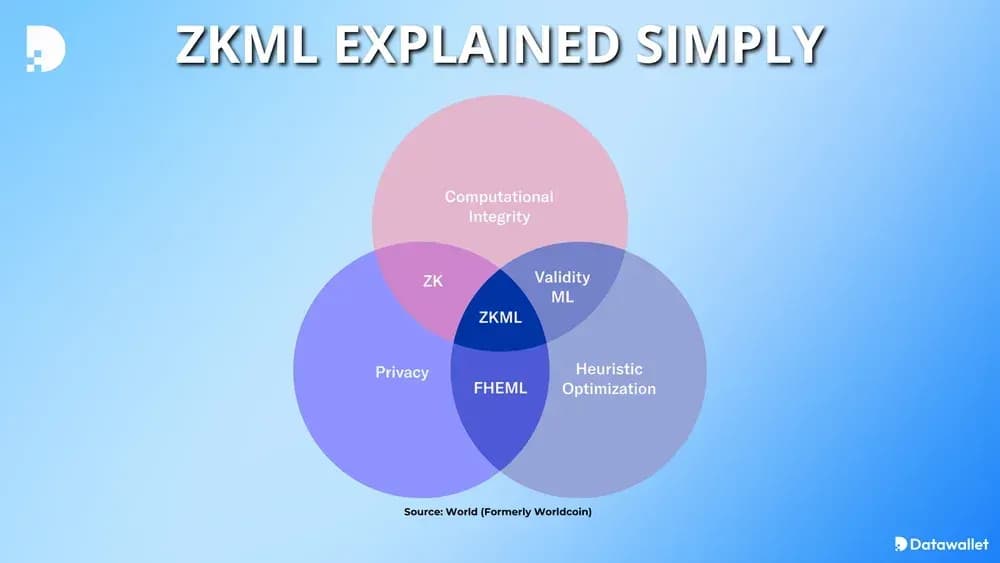
The AI landscape in 2026 is defined by a trust deficit. As models grow larger and more integrated into enterprise workflows, the "black box" nature of inference has become a critical liability. Companies can no longer afford to assume an AI model executed a task correctly without proof. ZKML 2026 addresses this by introducing cryptographic verification that confirms an AI ran correctly without revealing the input data or the model weights to either party. This capability transforms AI from a speculative tool into a verifiable utility.
This shift is not merely technical; it is operational. For enterprise applications, ZKML ensures compliance with strict data privacy regulations while maintaining the integrity of automated decisions. In consumer applications, it provides a layer of accountability that was previously impossible. By decoupling verification from revelation, ZKML enables a new class of AI services where trust is mathematically guaranteed rather than institutionally assumed.
The urgency stems from the increasing value of AI-driven decisions. Whether it is financial auditing, medical diagnosis, or automated content moderation, the cost of a hallucinated or manipulated output is too high to ignore. ZKML 2026 provides the infrastructure to prove correctness, ensuring that as AI scales, so does its reliability.
Top ZKML Frameworks for 2026
The landscape for zero-knowledge machine learning (ZKML) has shifted from experimental prototypes to production-ready infrastructure. In 2026, the primary challenge is no longer just generating proofs, but doing so at a speed that makes real-time or near-real-time inference viable. The leading frameworks now focus on parallelizing proof generation across clusters and supporting a wider variety of model architectures, from large language models to complex vision systems.
Polyhedra Network
Polyhedra Network has emerged as a significant player in the ZKML space, offering a comprehensive infrastructure layer designed to verify AI model execution. Their approach focuses on making the verification process accessible, allowing developers to generate ZK-SNARKs for realistic ML models without needing to build the underlying cryptographic circuits from scratch. This framework supports state-of-the-art vision models and distilled LLMs, bridging the gap between complex mathematical proofs and practical AI deployment.
Polyhedra’s infrastructure is particularly notable for its ease of integration. By abstracting the complexity of circuit compilation, it allows teams to focus on their model’s performance rather than the intricacies of zero-knowledge cryptography. This has made it a go-to choice for projects requiring transparent and verifiable AI outputs in decentralized environments.
ZKML Framework (ACM Research)
Originally presented in academic research, the ZKML framework pioneered the production of ZK-SNARKs for realistic machine learning models. Unlike earlier systems that were limited to simple linear regression or basic neural networks, this framework demonstrated the ability to handle complex architectures, including distilled GPT-2 models and advanced vision transformers. Its significance lies in proving that high-fidelity AI models could be verified efficiently.
While the original academic implementation served as a foundational benchmark, its methodologies have influenced many commercial tools. For developers looking to understand the baseline capabilities of ZKML, studying the optimizations introduced in this framework provides critical insight into how modern tools manage the computational overhead of proof generation.
ICME Labs Infrastructure
ICME Labs has focused on the scalability of ZKML by addressing the bottleneck of single-machine proof generation. Their 2026-oriented approach emphasizes parallelization, splitting the circuit generation process across a cluster of machines. This shift is critical for handling the increasing size and complexity of AI models, which often exceed the memory and processing limits of a single node.
By distributing the workload, ICME’s infrastructure enables faster proof times and higher throughput. This makes it suitable for enterprise applications where latency is a concern, such as real-time fraud detection or automated compliance checking. Their work highlights the importance of infrastructure design in making ZKML practical for large-scale deployment.
Comparison of Key ZKML Providers
The table below compares the primary capabilities of these leading ZKML frameworks as they stand in 2026. Note that specific performance metrics like proof generation time are highly dependent on the underlying hardware and model complexity.
| Provider | Supported Model Types | Integration Focus | Scalability Approach |
|---|---|---|---|
| Polyhedra Network | Vision, Distilled LLMs | High-level API, easy integration | Cluster-ready infrastructure |
| ZKML Framework | Vision, GPT-2, Neural Nets | Research-grade, foundational | Single-node optimized |
| ICME Labs | General ML, LLMs | Infrastructure-focused | Parallelized across clusters |
Hardware for Running ZKML Proofs
Generating zero-knowledge proofs for machine learning models is computationally intensive. In 2026, the landscape shifts from single-machine proof generation to parallelized workflows across clusters. This transition demands high-performance computing hardware capable of handling massive matrix multiplications and memory-heavy constraint systems.
Developers and researchers need GPUs with sufficient VRAM and high memory bandwidth to process large neural network circuits efficiently. Modern NVIDIA architectures remain the standard for zkML development due to their optimized tensor cores and mature CUDA ecosystem. For those building proof generation pipelines, selecting hardware with high interconnect bandwidth ensures that parallelized proof steps communicate without bottlenecks.
The following tools represent the current baseline for ZKML infrastructure. These selections focus on raw compute power and memory capacity, which are the primary constraints in proof generation.
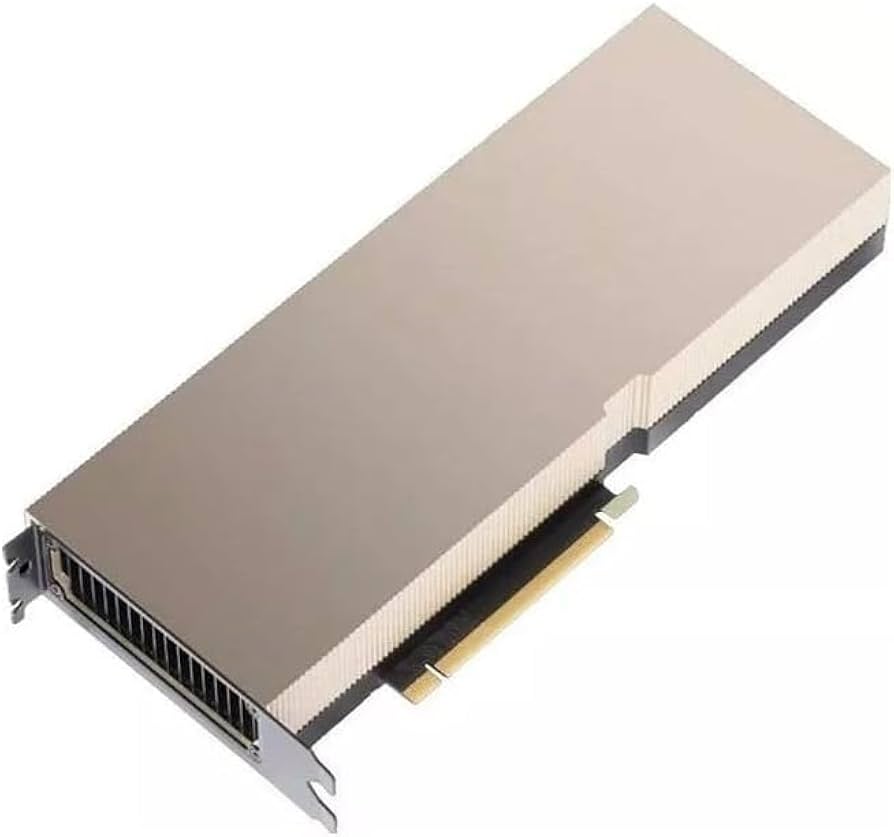

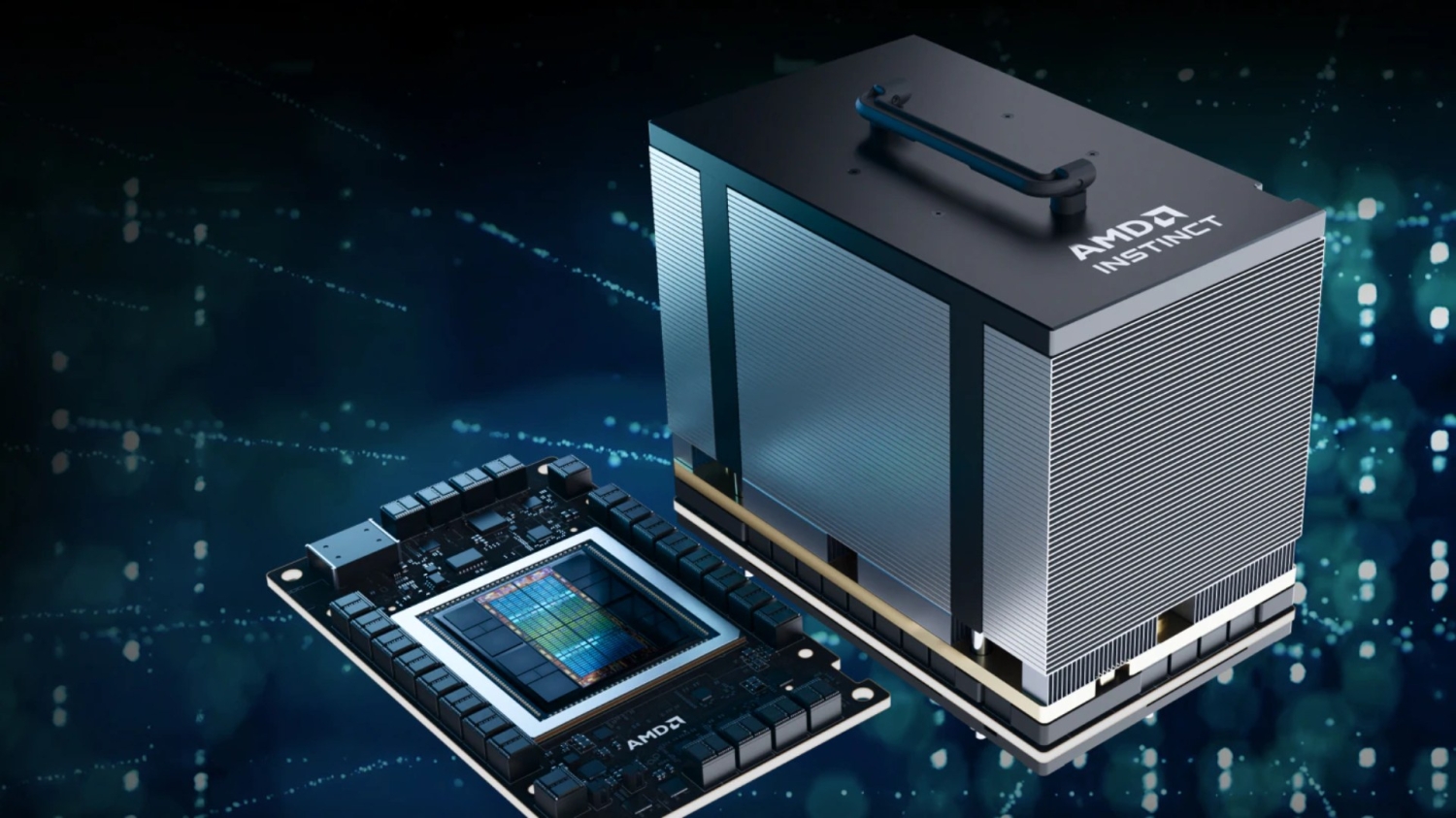
As an Amazon Associate, we may earn from qualifying purchases.
Choosing the Right ZKML Stack
Selecting a ZKML 2026 infrastructure requires matching your specific verification needs with the right tooling. The landscape is fragmented, with different frameworks optimizing for distinct trade-offs between proof generation speed, model complexity, and developer accessibility. A stack that works for a high-frequency trading audit will likely fail for a privacy-preserving chatbot application.
The decision process should follow a logical progression, starting with the model itself and moving outward to the deployment environment. By evaluating these factors in order, you can eliminate incompatible options early and focus on tools that support your specific ZKML 2026 requirements.
Start by defining the neural network architecture and size you need to verify. Some ZKML frameworks support only specific layers or quantized models, while others handle full-precision transformers. This is the most critical constraint; if the framework cannot represent your model, no amount of optimization will help. Check the supported layer types and maximum parameter counts for each candidate tool.
Determine how fast proofs need to be generated and verified. Applications like real-time fraud detection require sub-second proof generation, which often necessitates specialized hardware or pre-computed circuits. For batch processing or audit trails, higher latency may be acceptable. Compare the generation time per inference and the verification time on-chain or off-chain for each framework.
Review the quality of documentation, SDKs, and community support. ZKML development involves complex cryptography; a mature ecosystem with clear APIs and active GitHub repositories will significantly reduce development time. Look for frameworks that offer Python interfaces, as most ML workflows are Python-native. Check for recent commits and issue resolution rates to gauge active maintenance.
Ensure the tool integrates with your existing infrastructure. Some ZKML solutions are designed for specific blockchains, while others offer generic verification APIs. Consider whether you need on-chain verification, which incurs gas costs, or off-chain verification with cryptographic attestations. Verify compatibility with your cloud provider or edge devices if you are deploying to constrained environments.
By following this structured approach, you can master the complexities of ZKML 2026 tooling and select a stack that aligns with your technical and business goals.
Frequently Asked Questions About ZKML 2026
How does ZKML verify model execution without revealing data?
ZKML uses zero-knowledge proofs, typically ZK-SNARKs, to create a cryptographic certificate that the model was executed correctly. The prover (the entity running the model) generates a proof that the output matches the input and the model weights. The verifier checks this proof mathematically. The verifier learns nothing about the input data, the model weights, or the intermediate computation steps, only that the computation was valid.
What are the main computational costs of running ZKML?
Generating ZK proofs is computationally expensive, often requiring significant CPU and GPU resources. The cost scales with the complexity of the neural network architecture. In 2026, parallelization across clusters has reduced latency, but proof generation remains slower than standard inference. Verification, however, is extremely fast and cheap, making it suitable for on-chain verification.
Which AI models are currently supported by ZKML frameworks?
Current frameworks support a range of models, including Vision Transformers (ViT), distilled Large Language Models (LLMs), and various convolutional neural networks (CNNs). Full-precision, large-scale LLMs are still challenging to verify efficiently, so many deployments use quantized or distilled versions of models to reduce the circuit complexity and proof generation time.
No comments yet. Be the first to share your thoughts!