
ZKML 2026: The Compliance Imperative
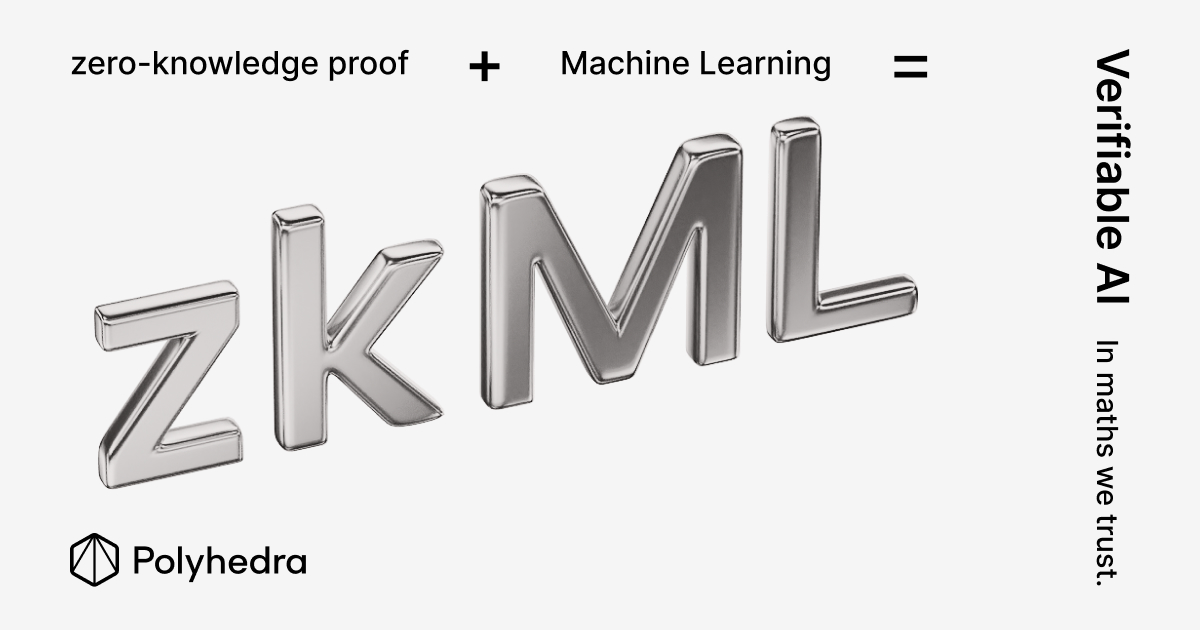
Zero-Knowledge Machine Learning (ZKML) has transitioned from cryptographic theory to a foundational infrastructure layer for enterprise AI compliance. By 2026, driven by the EU AI Act and US executive orders, ZKML provides the technical mechanism to prove that an AI model performed exactly as intended, without exposing proprietary data or sensitive weights.
For regulated industries, the "black box" nature of traditional AI presents an existential legal risk. Compliance teams can no longer accept opaque explanations for high-stakes decisions in healthcare, finance, or insurance. ZKML 2026 enables organizations to satisfy auditors while maintaining the competitive advantage of their proprietary AI assets, transforming compliance from a manual, sample-based audit into a continuous, cryptographic guarantee.
Verifiable Inference for Regulated Sectors
ZKML 2026 addresses a fundamental compliance gap: traditional audits verify code, but they cannot verify that a specific inference run adhered to that code on sensitive inputs. The technical mechanism relies on generating zero-knowledge proofs—typically ZK-SNARKs—that attest to the correctness of the computation. Research presented at ACM confirms that frameworks now exist to produce these proofs for realistic machine learning models, including vision systems and distilled language models.
These proofs serve as cryptographic evidence that the output was derived solely from the declared model and input data. For regulated sectors, this shifts the audit paradigm. Instead of trusting a vendor’s black-box API, a bank or healthcare provider can verify the integrity of the inference. The proof confirms that no unauthorized logic was injected and that the model operated within its trained parameters, which is essential for meeting strict data residency and model governance requirements.
2026 Performance Benchmarks and Costs
The transition from theoretical proof-of-concept to enterprise-grade ZKML 2026 infrastructure is defined by a clear divergence in performance capabilities. As of 2026, proof generation latency varies significantly based on model architecture and complexity. This distinction is critical for compliance officers and technical leads evaluating where ZKML can be deployed for real-time inference versus batch-processed audit trails.
For simpler model architectures, proof generation speeds have reached sub-second levels. This performance leap allows ZKML to be integrated into workflows requiring immediate verification, such as automated compliance checks or high-frequency transaction validation. However, this speed is contingent on the mathematical constraints of the underlying model, which must be simplified to fit within the prover’s computational limits.
Conversely, complex models—such as large language models or deep neural networks with millions of parameters—still face substantial computational overhead. Generating proofs for these architectures remains a resource-intensive process, often requiring minutes or even hours depending on the hardware and optimization techniques used. The cost of compute for these complex proofs is significantly higher, creating a trade-off between the depth of verification and the economic feasibility of running the inference.
| Model Type | Proof Generation Time | Relative Compute Cost | Primary Use Case |
|---|---|---|---|
| Simple Models (e.g., Logistic Regression, Small CNNs) | Sub-second | Low | Real-time compliance, high-frequency audit trails |
| Medium Models (e.g., Standard Transformers) | Seconds to Minutes | Medium | Batch verification, periodic regulatory reporting |
| Complex Models (e.g., Large LLMs, Deep Vision) | Minutes to Hours | High | Deep-dive forensic analysis, high-stakes legal evidence |
While the computational costs for complex proofs remain a constraint, the infrastructure supporting ZKML 2026 is increasingly integrated with broader blockchain ecosystems. The economic incentives for scaling these proofs are reflected in the utility tokens that often govern these networks, providing a tangible metric for the cost of verification services.
Adoption Roadmap for Enterprise Leaders
The transition from proof-of-concept to production-grade ZKML requires a structured evaluation framework. CTOs and Compliance Officers must treat verification not as an add-on, but as a core infrastructure constraint. This roadmap outlines the critical steps for assessing ZKML solutions against 2026 regulatory standards and operational realities.
ZKML solutions rely on specific proof systems such as zk-SNARKs or STARKs. Your existing AI infrastructure must support the mathematical constraints of the chosen system. Verify that the proof generation engine integrates with your current model training pipelines without requiring a complete rewrite of the inference stack.
Proof generation is computationally intensive. Evaluate whether the solution meets your Service Level Agreements (SLAs) for real-time inference. For high-frequency trading or autonomous systems, the latency overhead of generating a zero-knowledge proof must be within acceptable tolerances. Benchmark against Polyhedra Network’s 2026 projections for scalable proof generation.
Ensure the ZKML provider adheres to emerging frameworks from bodies like the ACM and relevant data protection authorities. The solution must demonstrate that it can produce auditable trails for compliance officers without revealing sensitive model weights or proprietary training data. Look for explicit support for GDPR Article 22 explanations and EU AI Act transparency requirements.
Test the verification process independently. A ZKML system is only as strong as its verification cost. Confirm that third-party auditors can verify proofs efficiently and that the verification keys are stored securely. Ensure the system supports recursive proof composition if your model architecture involves multiple neural network layers.
Zero-knowledge proofs require robust key management for proving and verifying keys. Establish a secure protocol for key rotation and storage. Compromised keys can invalidate the entire trust model. Integrate with existing Hardware Security Modules (HSMs) to manage cryptographic assets securely throughout the ZKML lifecycle.
Adopting ZKML 2026 is not merely a technical upgrade; it is a strategic compliance move. By following this checklist, enterprises can mitigate risk while preparing for a future where AI transparency is a legal requirement, not a competitive advantage.
Frequently Asked Questions on ZKML
Is ZKML ready for production in 2026? For simple inference tasks, ZKML 2026 achieves sub-second proof generation, making it viable for real-time compliance checks. Complex models remain computationally heavy, requiring careful architecture design to meet latency requirements.
How does ZKML handle GDPR and data privacy? ZKML enables verifiable inference without exposing raw training data or user inputs. This cryptographic approach aligns with GDPR’s data minimization principles, allowing enterprises to prove compliance without revealing sensitive information.
What is the cost of proof generation? Proof generation costs depend on model complexity and proof system choice (e.g., PLONK vs. STARKs). While still higher than standard inference, costs are dropping as hardware acceleration and optimized circuits mature in the 2025–2026 landscape.
No comments yet. Be the first to share your thoughts!